

Steel manufacturing is one of the most difficult industrial sectors to decarbonise because carbon is used as both an energy source and a chemical reducing agent during ironmaking.
Choosing green hydrogen for steel production is gaining momentum, hydrogen-based steelmaking offers a pathway to reduce emissions by replacing fossil reductants during iron ore reduction.
Hydrogen demand from green steel projects remains relatively small but is expected to grow as hydrogen-based ironmaking projects move from pilot and demonstration phases toward commercial deployment.
As global steel producers work toward lower-carbon production routes, renewable hydrogen and electrolysis are becoming increasingly relevant parts of future steel manufacturing infrastructure.

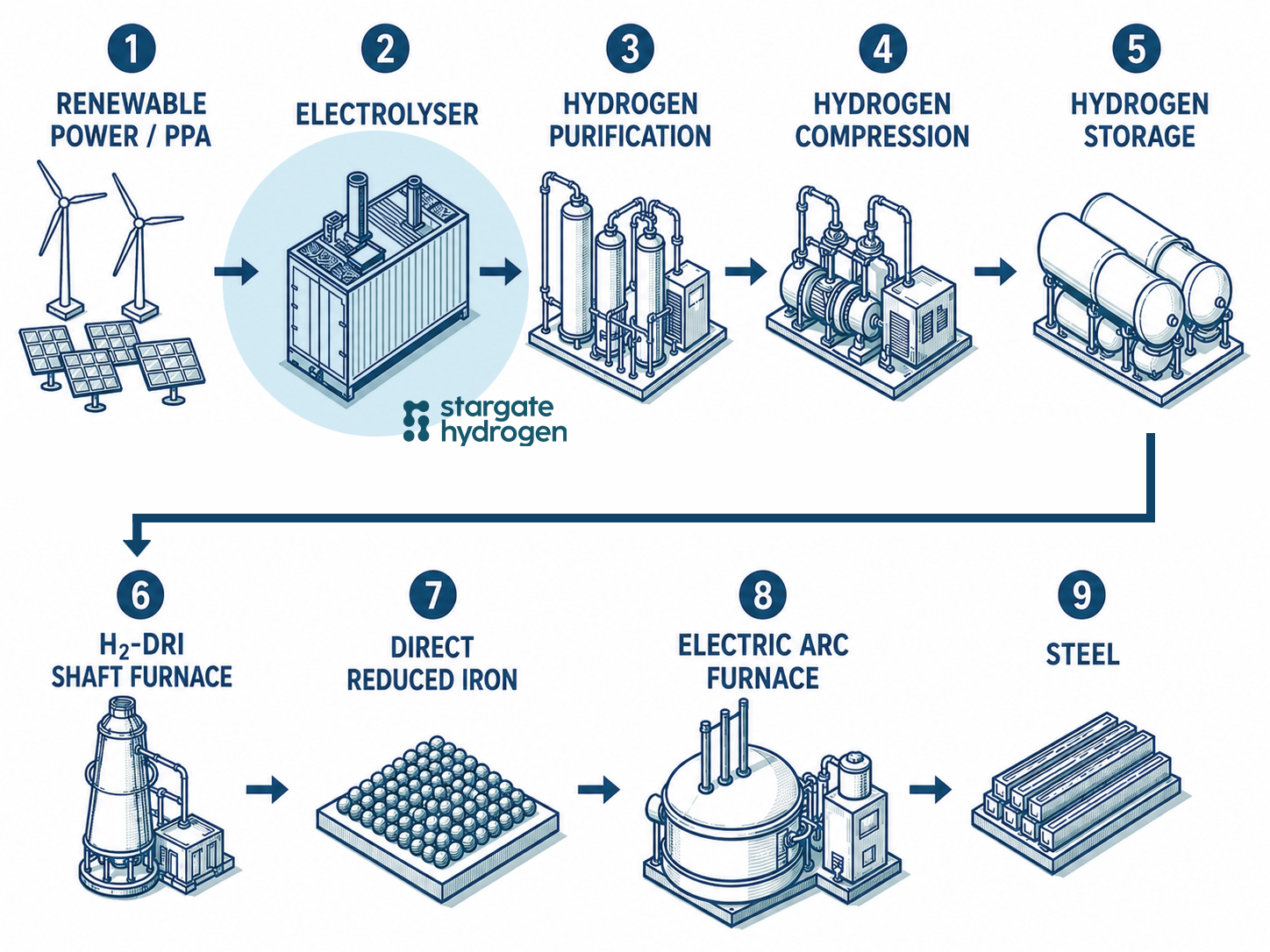
Hydrogen for Steel Production
Hydrogen can support steel production through ironmaking and process heat applications. The most important pathway is hydrogen-based direct reduced iron, known as H₂-DRI, where hydrogen acts as the reducing agent that removes oxygen from iron ore. The resulting direct reduced iron is then melted in an electric arc furnace, a route known as H₂-DRI-EAF.
Hydrogen can also be injected into existing blast furnaces to reduce coal and coke consumption and lower CO₂ emissions. However, this is generally considered a transitional approach because blast furnaces still rely on coke for operational stability. Hydrogen may also be used in reheating furnaces, heat treatment, ladle preheating, and auxiliary burners.
Key Factors Driving Green Hydrogen for Steel Production

Net-zero commitments

Automotive industry pressure
Carbon pricing exposure

Investor focus on decarbonisation

National strategies
How Stargate Hydrogen Supports Steel Production
Stargate Hydrogen supports Green Steel projects with industrial alkaline electrolysers that produce hydrogen efficiently and reliably. Our scalable systems enable EPCs, project developers and industries to integrate green hydrogen into their Steel production plants.

starbase
Series
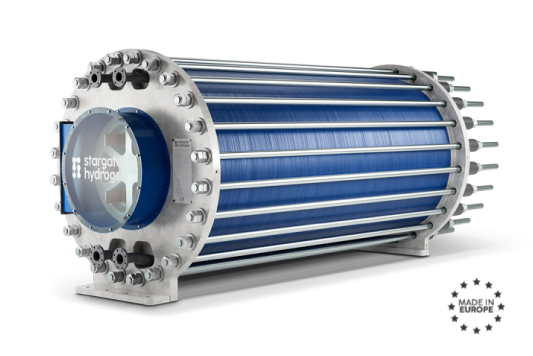
Large Scale Stacks
5 MW Next Generation Alkaline Stacks for System Integrators
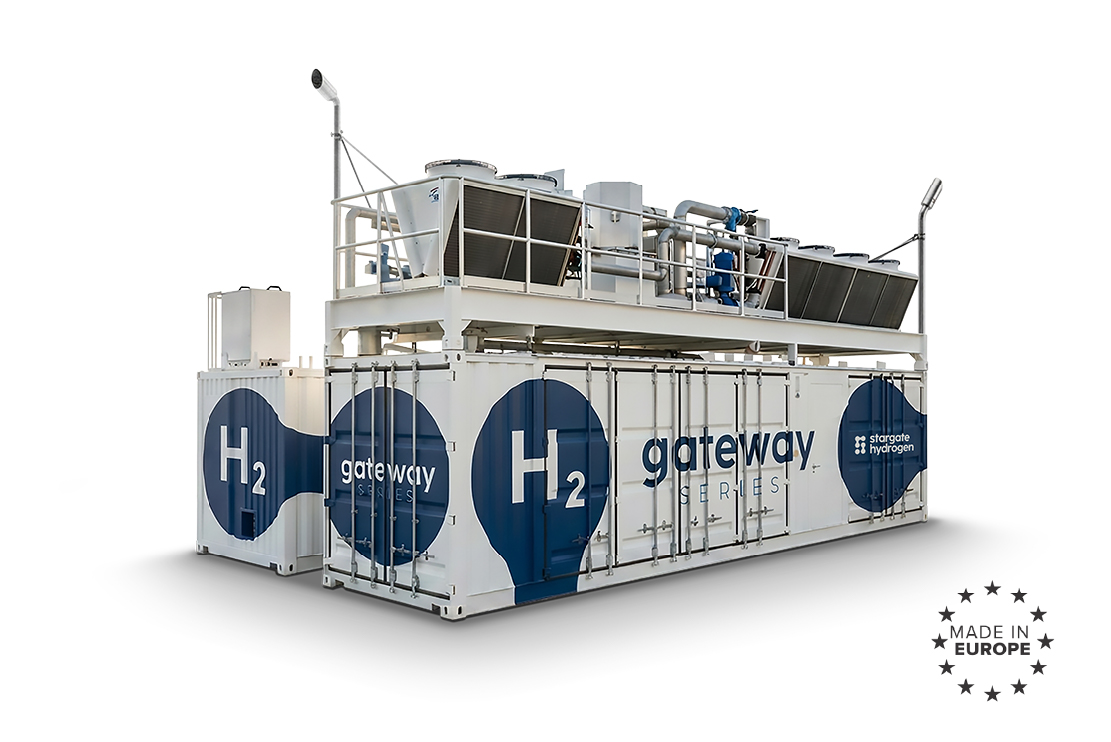
gateway
series
Electrolyser Systems
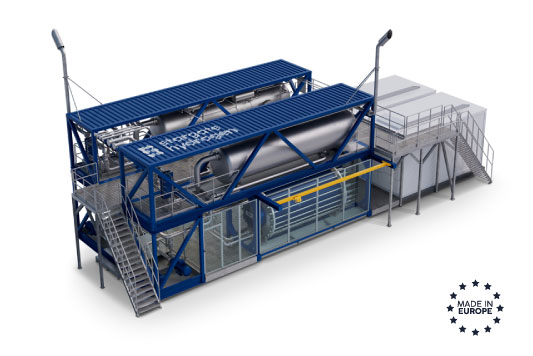
1 MW Containerised Alkaline Hydrogen Production Systems
aurora
Series
Large Scale Systems
10 MW Containerised Alkaline Hydrogen Production Systems
10 Most Frequently Asked Questions about Green Steel Production
Stargate Hydrogen supports green steel projects with industrial alkaline electrolysers that break the water molecule and create Hydrogen For steel Production efficiently and reliably. Our scalable systems help developers and producers to integrate green hydrogen into Steel production.


What Is Green Steel Production?
Green steel production refers to steelmaking methods that significantly reduce greenhouse gas emissions compared to conventional blast furnace routes. The most widely discussed pathway combines renewable hydrogen, hydrogen-based direct reduced iron (H₂-DRI), and electric arc furnace (EAF) steelmaking.

How Is Hydrogen Used In Green Steel Production?
Hydrogen is used as a reducing agent during iron ore reduction. In hydrogen-based direct reduced iron (H₂-DRI), hydrogen removes oxygen from iron ore, producing direct reduced iron that is later melted in an electric arc furnace to produce steel.

What Is H₂-DRI-EAF Steelmaking?
H₂-DRI-EAF stands for hydrogen-based direct reduced iron followed by electric arc furnace steelmaking. This process replaces fossil-based reductants with hydrogen and is considered one of the leading pathways for low-carbon primary steel production.

Why Is Green Hydrogen Important For Steel Manufacturing?
Green hydrogen for steel production can replace fossil carbon during ironmaking. When produced through electrolysis powered by renewable electricity, hydrogen enables substantial emissions reductions compared to traditional blast furnace steelmaking routes.

Can Hydrogen Replace Coke In Blast Furnaces?
Hydrogen can partially replace fossil reductants through blast furnace injection. However, coke still performs important structural and operational functions inside the furnace, which is why hydrogen injection is generally considered a transitional decarbonisation pathway.

What Is The Difference Between Green Steel And Low-Carbon Steel?
Green steel typically refers to steel produced using renewable energy and low-emissions production methods. Low-carbon steel is a broader category that includes steel produced through various emissions-reduction approaches, including hydrogen, carbon capture, and increased scrap usage.

How Is Green Hydrogen Produced For Steel Plants?
Green hydrogen is produced through electrolysis, which uses electricity to split water into hydrogen and oxygen. When powered by renewable electricity sources such as wind or solar energy, the resulting hydrogen can support green steel production.

What Size Electrolyser Is Needed For Green Steel Production?
The required electrolyser capacity depends on steel output, hydrogen demand, operating hours, renewable power availability, and storage strategy. Large-scale green steel facilities may require substantial hydrogen production capacity, often delivered through modular electrolyser deployments.

Is Green Steel Completely Carbon-Free?
Not necessarily. While green steel production can dramatically reduce emissions, some emissions may remain from electricity generation, raw material processing, transport, alloying materials, and other parts of the steel value chain.

What Regulations Are Driving Green Steel Production In Europe?
Key drivers include the EU Emissions Trading System (EU ETS), the Carbon Border Adjustment Mechanism (CBAM), renewable hydrogen targets, industrial decarbonisation policies, and growing demand for lower-carbon materials from automotive, construction, and manufacturing sectors.
Latest Articles about Hydrogen for Steel Production

