

Hydrogenation is a key process in food manufacturing, helping producers improve product stability, extend shelf life, and achieve the texture and consistency required across a wide range of edible oils and fats.
Manufacturers are under growing pressure to reduce the carbon footprint of their operations while maintaining strict quality standards, reliable production, and cost competitiveness.
For these producers, replacing fossil-based hydrogen with green hydrogen for hydrogenation is a practical way to lower emissions without changing established hydrogenation processes or product quality.
As an electrolyser manufacturer, we supply the systems that produce high-purity green hydrogen on site, giving food manufacturers a reliable hydrogen source while supporting their transition to more sustainable production.

Hydrogen for Hydrogenation
Hydrogen for hydrogenation is an essential feedstock in food production, where it is used to modify vegetable oils and fats to achieve the required stability, texture, and performance for a wide range of food products. Without a reliable hydrogen supply, continuous hydrogenation is not possible.
To support these operations, food processing facilities typically operate dedicated hydrogen infrastructure, including storage, pressure regulation, distribution systems, and hydrogenation reactors. In many cases, the hydrogen is delivered from external suppliers or produced from natural gas, resulting in associated CO₂ emissions.
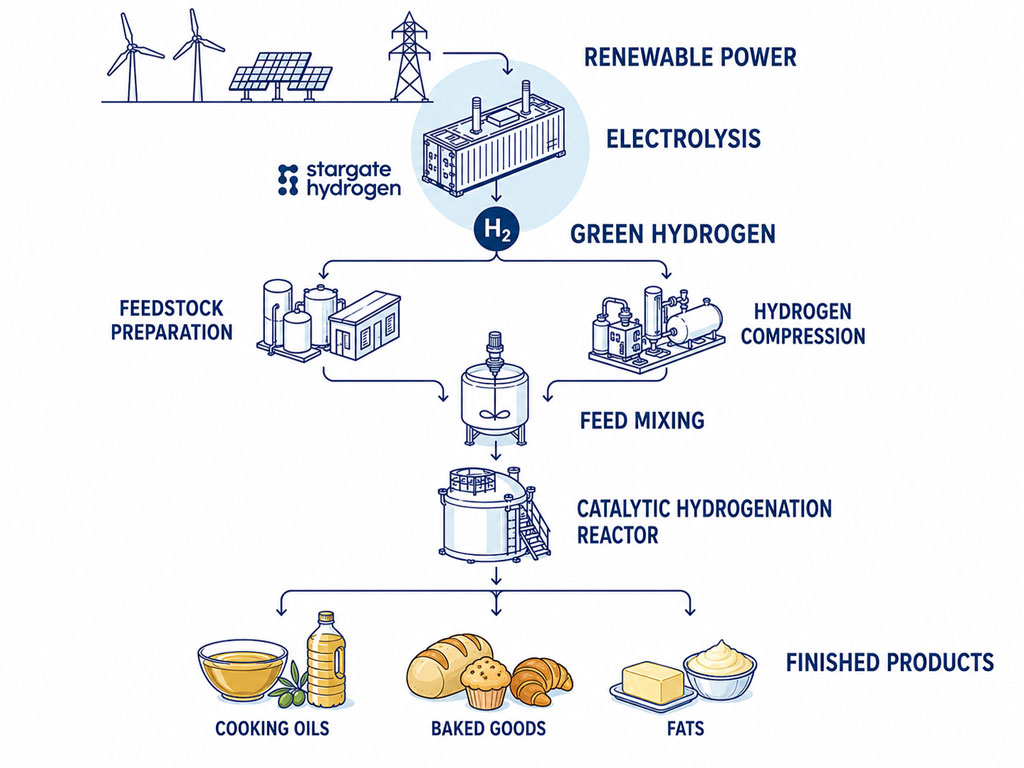
This creates a clear opportunity for green hydrogen for hydrogenation. As shown in the process diagram, on site electrolysis can supply high purity hydrogen directly to existing hydrogenation systems, allowing food manufacturers to own the feedstock while reduce emissions without major changes to their established production process.
Key Factors Driving Green Hydrogen for Hydrogenation

Net-zero commitments

Demand for Low-Carbon Food

Carbon pricing exposure

Investor focus on decarbonisation

National strategies
How Stargate Hydrogen Supports Hydrogenation
Stargate Hydrogen supports the food industry with industrial alkaline electrolysers that produce hydrogen for hydrogenation efficiently and reliably. Our systems enable industries to easily implement hydrogen production into their existing operations.

starbase
Series
Large Scale Stacks
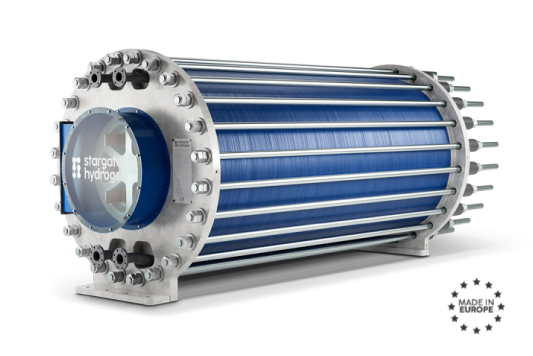
5 MW Next Generation Alkaline Stacks for System Integrators
gateway
series
Electrolyser Systems
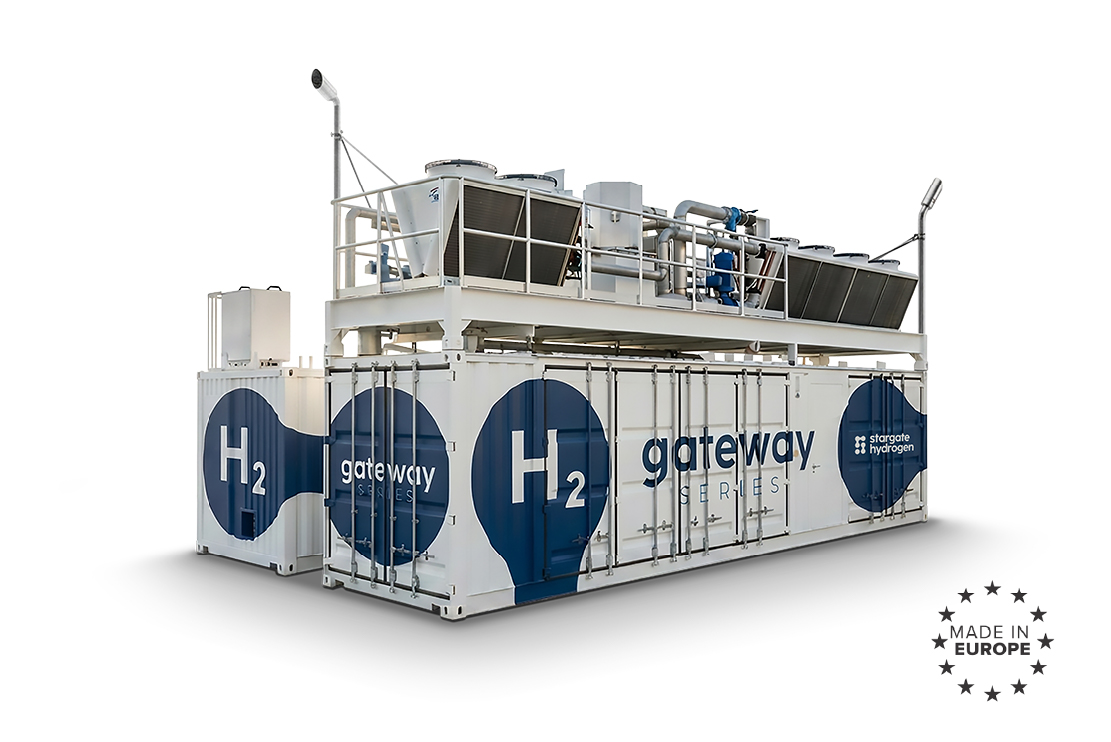
1 MW Containerised Alkaline Hydrogen Production Systems
aurora
Series
Large Scale Systems
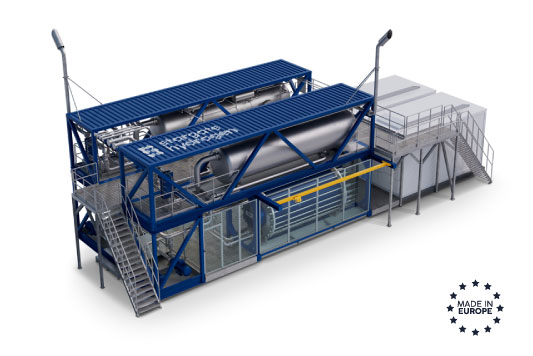
10 MW Containerised Alkaline Hydrogen Production Systems
10 Most Frequently Asked Questions about Hydrogen for Hydrogenation
Stargate Hydrogen supports the food industry with industrial alkaline electrolysers that produce pure hydrogen for hydrogenation efficiently and reliably. Our systems enable industries to easily implement hydrogen production into their existing operations.


What is hydrogenation?
Hydrogenation is a process that adds hydrogen to unsaturated vegetable oils using a catalyst. This changes the oil’s molecular structure, making it more stable and altering its physical properties. In the food industry, hydrogenation is used to produce ingredients with specific textures, melting points, and shelf lives for products such as margarine, shortening, baked goods, confectionery, and frying oils.

Why is hydrogen used in hydrogenation instead of other reducing agents?
Hydrogen offers a unique combination of efficiency, selectivity, and cleanliness. During hydrogenation, hydrogen molecules react directly with carbon-carbon double bonds in unsaturated compounds, converting them into single bonds without introducing unwanted by-products. Its low molecular weight also enables rapid diffusion through porous catalysts, allowing reactions to proceed efficiently under controlled conditions.

How does a catalyst enable hydrogenation
A catalyst provides an active surface where hydrogen reacts with unsaturated molecules, allowing hydrogenation to occur efficiently. Nickel is the most commonly used catalyst because it offers a good balance of performance, cost, and food safety, while remaining unchanged throughout the reaction.

What determines how much hydrogen a hydrogenation process consumes?
Hydrogen consumption depends mainly on the feedstock and the desired product. Oils with higher levels of unsaturation require more hydrogen, while optimizing reaction conditions helps improve hydrogen efficiency and reduce losses.

Why are pressure and temperature carefully controlled during hydrogenation?
Pressure and temperature directly affect reaction speed, efficiency, and product quality. Careful control ensures consistent results while minimizing energy consumption, catalyst degradation, and unwanted side reactions.

What role does hydrogen purity play in hydrogenation?
High-purity hydrogen is essential for maintaining catalyst performance and consistent product quality. Even small amounts of contaminants can reduce catalyst life and affect process reliability.

Why is hydrogen compression necessary before hydrogenation?
Hydrogen is compressed to match the reactor’s operating pressure, ensuring a stable hydrogen supply, efficient mixing, and optimal reaction performance throughout the process.

Can existing hydrogenation plants switch from grey hydrogen to green hydrogen?
Yes. Since hydrogen is chemically identical regardless of how it is produced, most existing hydrogenation plants can replace grey hydrogen with green hydrogen without significant changes to downstream equipment.

What are the biggest operational challenges in hydrogenation?
The main challenges include maintaining catalyst performance, managing feedstock variability, ensuring a continuous hydrogen supply, controlling process conditions, and achieving consistent product quality.

How does green hydrogen improve the sustainability of hydrogenation?
Green hydrogen replaces fossil-based hydrogen with renewable hydrogen produced through water electrolysis. This reduces the carbon footprint of hydrogenated products without changing the hydrogenation process or product quality.
Latest Articles About Hydrogen for Hydrogenation

