

Many industries face a difficult challenge. Reduce emissions while continuing to rely on energy-dense fuels that batteries cannot easily replace.
Commercial aviation, ocean shipping, long-haul transport, and several industrial processes require fuels that can be stored, transported, and used within existing infrastructure.
For these sectors, synthetic fuels such as E-methanol, E-kerosene (eSAF), E-diesel and E-methane, emerge as a practical pathway to lower carbon emissions.
Green hydrogen serves as an energy carrier and feedstock, enabling renewable electricity to be converted into liquid and gaseous fuels that can be used in existing energy systems.

Hydrogen for e-Fuels Production
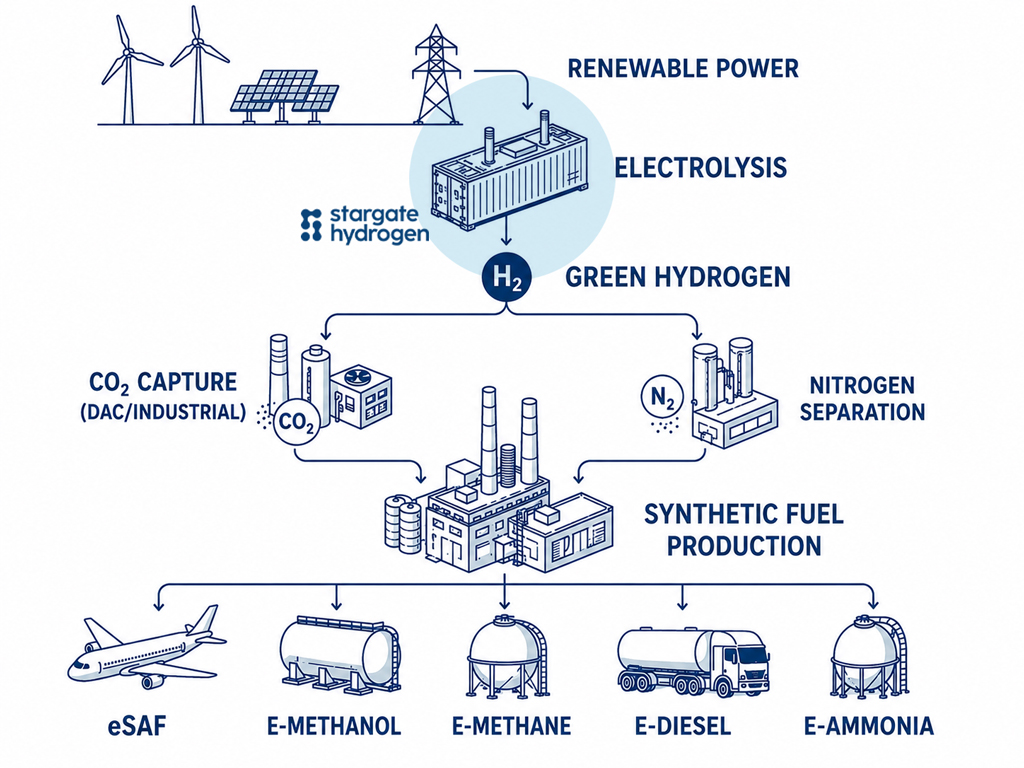
Green hydrogen is the primary feedstock used in e-fuel production. It is produced through water electrolysis powered by renewable electricity and is then combined with captured CO₂ or nitrogen to create synthetic fuels. Without hydrogen, e-fuel production is not possible.
To support these operations, most refining facilities maintain dedicated hydrogen infrastructure that includes, hydrogen pipeline systems, compression equipment, storage facilities, and distribution networks. Usually this hydrogen is produced via steam methane reforming with substantial CO₂ emissions.
That is an opportunity for green hydrogen. As you can on the illustrated process line, established systems create a practical pathway for integrating green hydrogen without requiring major changes to downstream process units.
Key Factors Driving Green Hydrogen for e-Fuels Production

Net-zero commitments

Cleaner fuel requirements

Carbon pricing exposure

Investor focus on decarbonisation

National strategies
How Stargate Hydrogen Supports e-Fuels
Stargate Hydrogen supports e-Fuels production with industrial alkaline electrolysers that produce hydrogen efficiently and reliably. Our scalable systems enable EPCs, project developers and industries to integrate green hydrogen into e-Fuel plants.

starbase
Series
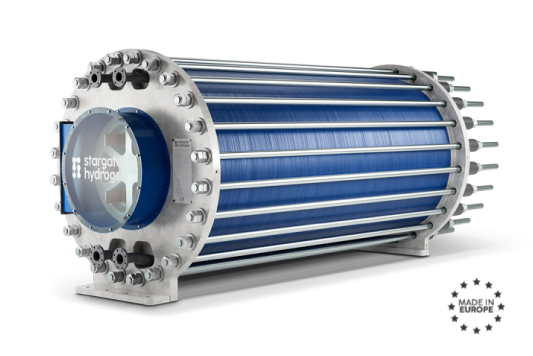
Large Scale Stacks
5 MW Next Generation Alkaline Stacks for System Integrators
gateway
series
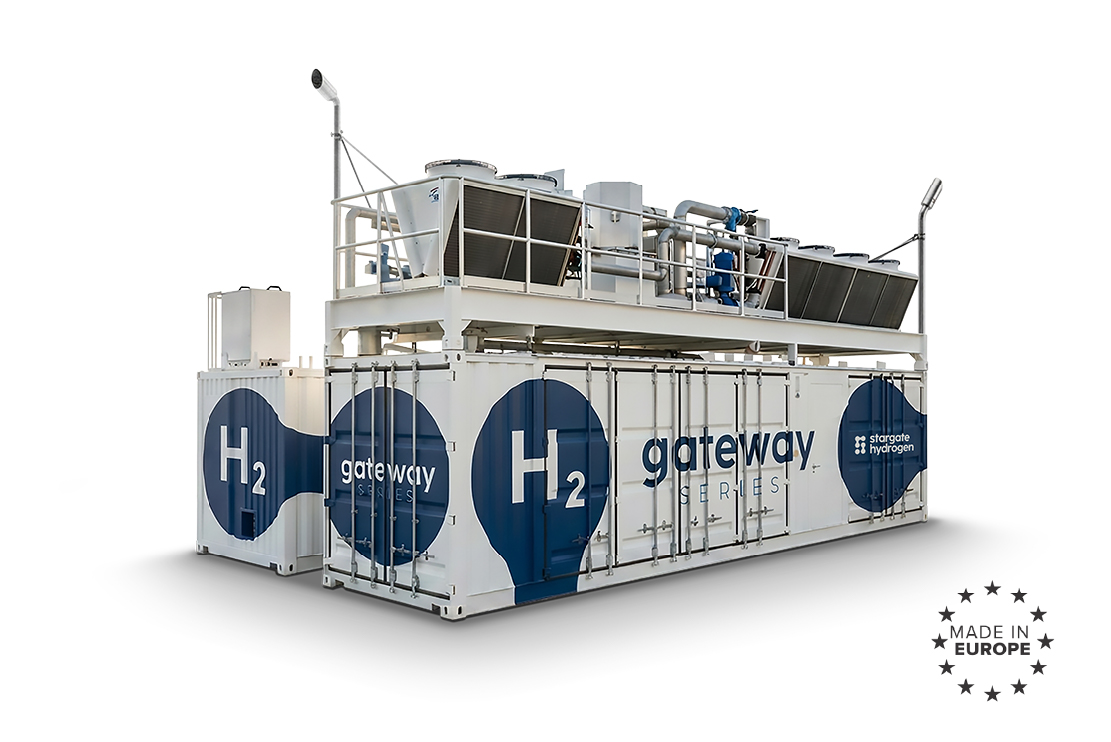
Electrolyser Systems
1 MW Containerised Alkaline Hydrogen Production Systems
aurora
Series
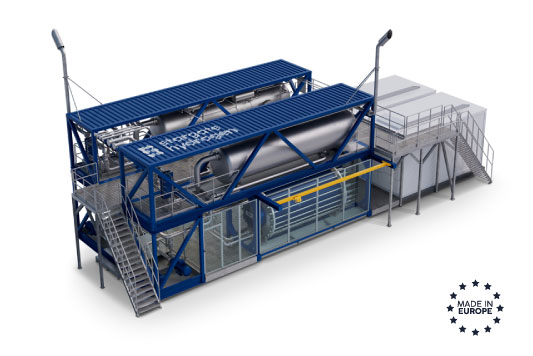
Large Scale Systems
10 MW Containerised Alkaline Hydrogen Production Systems
10 Most Frequently Asked Questions about Hydrogen for e-Fuels Production
Stargate Hydrogen supports e-fuels production with industrial alkaline electrolysers that break the water molecule and create hydrogen efficiently and reliably. Our scalable systems help developers and producers to integrate green hydrogen into e-fuel production plants.


What are e-Fuels?
E-fuels, also known as synthetic fuels or electrofuels, are fuels produced using renewable electricity, green hydrogen, and either captured carbon dioxide or nitrogen. Common examples include eSAF, e-methanol, e-methane, e-diesel, and e-ammonia.

How is green hydrogen used in e-fuel production?
Green hydrogen is the primary feedstock used in e-fuel production. It is produced through water electrolysis powered by renewable electricity and is then combined with captured CO₂ or nitrogen to create synthetic fuels. Without hydrogen, e-fuel production is not possible.

Which synthetic fuels can be produced using green hydrogen?
Green Hydrogen for e-Fuels production can be used in several types of synthetic fuels, including: eSAF (electro-Sustainable Aviation Fuel), E-kerosene, E-methanol, E-methane, E-diesel and E-ammonia. Each fuel uses green hydrogen as a key ingredient in the synthesis process.

What is the difference between e-fuels and biofuels?
E-fuels are produced from renewable electricity, water, and captured carbon dioxide or nitrogen. Biofuels are produced from biological feedstocks such as crops, agricultural waste, or organic residues. E-fuels do not rely on biomass availability and can be produced wherever renewable power, water, and feedstock sources are available.

Why are e-fuels important for aviation and shipping?
Aviation and shipping require energy-dense fuels that can be stored and transported over long distances. Batteries are often impractical for these applications. E-fuels provide a lower-carbon alternative that can work within existing fuel infrastructure while helping reduce emissions from hard-to-abate sectors.

What is eSAF and how is it produced?
eSAF, or electro-Sustainable Aviation Fuel, is a synthetic aviation fuel made from renewable electricity, green hydrogen, and captured carbon dioxide. The hydrogen and carbon are converted into syngas and then processed through pathways such as Fischer-Tropsch synthesis or Methanol-to-Jet technology to create aviation fuel.

What role does carbon capture play in e-fuel production?
Many e-fuels require a source of carbon. Carbon capture provides the CO₂ needed for fuel synthesis and can come from industrial emissions or Direct Air Capture (DAC) systems. The captured carbon is combined with green hydrogen to produce fuels such as e-methanol, e-methane, e-diesel, and eSAF.

What are RFNBO fuels?
RFNBO stands for Renewable Fuel of Non-Biological Origin. This category includes renewable hydrogen and synthetic fuels produced using renewable electricity. RFNBOs are an important part of European decarbonisation policy and are supported by regulations such as RED III, ReFuelEU Aviation, and FuelEU Maritime.

How much hydrogen is required to produce synthetic fuels?
The amount of Hydrogen for e-Fuels production depends on the fuel pathway. For example: E-methanol production requires approximately 0.188 tons of hydrogen per ton of methanol, while E-ammonia production requires approximately 0.176 tons of hydrogen per ton of ammonia. Large-scale e-fuel projects often require substantial hydrogen production capacity, making electrolysers a critical component of project design.

Why are electrolysers important for e-fuel plants?
Electrolysers convert water and renewable electricity into green hydrogen. Since green hydrogen is the foundation of synthetic fuel production, electrolyser performance directly affects project economics, fuel output, and carbon intensity. Factors such as efficiency, reliability, scalability, and operating flexibility are key considerations when selecting electrolysis technology for e-fuel projects.
Latest Articles About Hydrogen for e-Fuels production

