


29.06.2026
Power to Hydrogen: Electrolyser Reliability More Important Than Peak Efficiency – By Aniket Choudhari
Key Takeaways
- Power to Hydrogen converts renewable electricity into hydrogen through electrolysis.
- Hydrogen projects depend on uptime, degradation management, and predictability.
- Peak electrolyser efficiency alone does not determine lifecycle hydrogen cost.
- Reliability is a major factor in project bankability and industrial procurement decisions.
- Both PEM and Alkaline electrolysers have strengths, but industrial suitability depends on operating profile and project requirements.
Power to Hydrogen Is Moving from Ambition to Execution
The conversation around Power to Hydrogen is changing. A few years ago, most discussions focused on targets, pilot projects, and efficiency records. Today, in mid-2026, industrial buyers are asking more practical questions. Such as, can the electrolyser work reliably? How often will stacks need replacement? What happens to efficiency after years of continuous operation? How quickly can maintenance teams respond if the system goes offline?
That shift reflects the broader maturity of the Power to Hydrogen market.
Refineries, ammonia producers, steel plants, utilities, and synthetic fuel developers are planning systems that must operate continuously for decades, not just prove technical feasibility.
This creates a separate set of priorities. Efficiency still matters because electricity is still one of the largest cost drivers in green hydrogen production. But industrial operators are increasingly recognising that a highly efficient electrolyser on day one may not deliver the lowest hydrogen cost over the lifetime of the project. Electrolyser availability is as important as efficiency: a non-working electrolyser can erase all the value created by superior performance.
Reliability, availability, degradation, and maintenance requirements are becoming equal, if not more important than efficiency alone.
According to the International Energy Agency, up to 2024, low-emissions hydrogen still represented less than 1% of global hydrogen production, despite rising investment activity and strong policy support. At the same time, more than 200 low-emissions hydrogen projects reached the final investment decision by the end of that year. The market is progressing, but developers are under growing pressure to deliver operational projects rather than ambitious announcements. That pressure changes how electrolysers are evaluated.
What Is Power to Hydrogen?
Power to Hydrogen refers to the process of converting electricity into hydrogen through water electrolysis.
When the electricity comes from renewable energy sources such as wind power or photovoltaic generation, the resulting hydrogen can be classified as renewable hydrogen or green hydrogen.
The concept sits within the broader Power to X category, where electricity is converted into fuels, chemicals, heat, or industrial feedstocks. In the case of Power to Hydrogen, the output molecule is green hydrogen, which can then be used directly or converted into derivatives such as ammonia, methanol, or e-methane.
The appeal of Power to Hydrogen is linked to sectors that are difficult to electrify directly. Heavy industry often requires high-temperature processes, chemical feedstocks, or continuous energy supply that electricity alone cannot always provide efficiently. Hydrogen offers another pathway.
What Is Power to X?
Power to Hydrogen is only one branch of a broader industrial concept known as Power to X, which describes processes that convert electricity into other forms of energy, fuels, chemicals, or industrial feedstocks.
The “X” represents the final output product. As renewable electricity generation grows across Europe, Power to X is becoming increasingly important because it creates ways to store, transport, and use renewable energy beyond the power grid itself.
In practical terms, Power to X connects renewable electricity with sectors that are difficult to decarbonise through direct electrification alone.
The category includes several pathways:
| Power Source | Conversion Process | End Product (X) |
| Renewable electricity | Electrolysis | Hydrogen |
| Renewable electricity + captured CO₂ | Synthesis | Methanol |
| Renewable electricity + nitrogen | Haber-Bosch process | Ammonia |
| Renewable electricity + CO₂ | Methanation | E-methane |
| Renewable electricity | Battery charging | Energy storage |
| Renewable electricity | Heat generation | Industrial heat |

The Problem with Only Chasing Peak Electrolyser Efficiency
One of the biggest challenges in the Power to Hydrogen market is that efficiency figures are often presented without enough context.
A headline number may describe stack-level efficiency under ideal operating conditions, while the actual industrial system includes cooling equipment, power electronics, gas treatment, water purification, compression, and control systems. Once those components are included, real plant performance can look quite different.
Another source of confusion is the lack of harmonised efficiency measurement standards across regions and manufacturers. Different standards and methodologies, such as those used in China (e.g., GB standards) and Europe (e.g., IEC or ISO-based approaches), may define system boundaries, operating conditions, and calculation methods differently. As a result, efficiency figures that appear comparable at first glance may not be measuring the same thing. For industrial operators and asset owners, this creates ambiguity and makes it difficult to perform fair, like-for-like evaluations of competing Power to Hydrogen technologies.
This distinction matters because industrial operators do not purchase isolated stacks. They purchase complete hydrogen production systems.
The table below illustrates why efficiency comparisons are rarely straightforward.
| Efficiency Metric | What It Measures | Limitation |
| Cell efficiency | Performance at cell level | Don’t reflect full plant operation |
| Stack efficiency | Stack performance | May exclude auxiliary systems |
| System efficiency | Full electrolyser system | Realistic but condition-dependent |
| Beginning-of-life | Initial performance | Does not account for degradation |
| Partial-load efficiency | Performance under variable load | May differ from nominal operation |
Another issue is degradation. Electrolysers do not maintain identical performance forever; there is a difference in performance at the beginning of life and end of life of a system. Over time, stacks gradually require more electricity to produce the same amount of hydrogen. EPRI reports that mature alkaline electrolysers typically experience around 1% annual performance loss under baseload operation, while PEM systems may experience up to 1.5%. That may sound manageable on paper, but over fifteen or twenty years, degradation becomes financially meaningful.
For industrial operators, the more important question is often not “What is the peak efficiency?” but rather “How stable is performance over the full operating lifetime?”
Reliability: The Overlooked KPI in Industrial Power to Hydrogen
Reliability has traditionally received less attention than efficiency because efficiency is easier to market. It produces simple headline numbers. Reliability does not.
Yet industrial hydrogen projects depend heavily on predictable operation. A refinery or ammonia plant cannot pause production simply because renewable electricity fluctuates or an electrolyser stack requires unexpected maintenance.
That is why uptime is becoming one of the defining procurement criteria in Power to Hydrogen projects.
An electrolyser that achieves slightly lower peak efficiency but maintains stable operation over long periods may produce lower-cost hydrogen overall than a system with higher theoretical efficiency but frequent interruptions.
Reliability also extends beyond the stack itself. Industrial electrolysers depend on a wide network of supporting systems, including cooling loops, pumps, gas handling infrastructure, rectifiers, water treatment units, and software controls. Failures in any of these areas can affect hydrogen production.
This is pushing buyers toward a more system-level view of performance. Instead of evaluating electrolysers only through isolated stack metrics, industrial developers increasingly assess:
- Expected uptime
- Service intervals
- Spare-parts strategy
- Operational support
- Dynamic operating capability (start & stop cycles)
- Degradation transparency
- Long-term maintenance requirements
This broader evaluation model is changing procurement discussions across the hydrogen sector.
PEM vs Alkaline: The Reliability Question
The comparison between PEM and alkaline electrolysis is often framed too aggressively, as if one technology must clearly replace the other. The reality is more nuanced.
PEM electrolysers are valued for their fast response times and compact design, in theory making them attractive for renewable integration and dynamic operation. At the same time, PEM systems have extremely fragile membranes that can be damaged by the slightest changes, such as mechanical, thermal, and chemical variations, including metal contamination, humidity levels, or gas cross-over.
Besides the fragile membranes, PEM electrolysers depend on extremely pure feed water for their operation; that makes the system more prone to downtime. Another issue is the need for precious metals such as iridium and platinum-group materials for its manufacturing; this can create supply-chain concerns and cost volatility.
Alkaline electrolysers don’t bring these disadvantages. The technology has a long industrial history, with a proven track record of being extremely reliable. In Stargate’s Hydrogen case, the electrodes have zero exposure to precious-metal supply chains and broad familiarity in industrial hydrogen production environments. Besides, modern alkaline electrolysers have improved their ability to operate dynamically alongside renewable energy sources.
| Topic | PEM Electrolysers | Alkaline Electrolysers |
| Dynamic response | Extremely fast | Improving rapidly |
| CAPEX | Higher | Lower |
| Industrial maturity | Improving | Very strong |
| Footprint | Compact | Larger but improving |
| Sensitive to water purity | Extremely sensitive | KOH 30% diluted |
| Supply-chain exposure | High | Very Low |
For industrial buyers, the right choice depends less on ideology and more on project realities. Operating profile, renewable variability, maintenance philosophy, available infrastructure, and financing strategy all influence which technology is the better fit.
Why Reliability Supports Bankability
As Power to Hydrogen projects become larger, lenders and investors are placing greater attention on operational certainty. A hydrogen plant that consistently produces contracted volumes is easier to finance than one dependent on optimistic assumptions around performance and maintenance.
Reliability affects nearly every financial variable in a project model:
- Annual hydrogen output
- Capacity factor
- Operating expenditure
- Replacement schedules
- Warranty exposure
- Insurance assessments
- Debt-service confidence
This is one reason the hydrogen sector is gradually moving toward stricter industrial standards and certification frameworks.
The market is maturing from a technology race into an infrastructure industry.
Stargate Hydrogen Delivers Peace of Mind
A strong example of reliability is Stargate Hydrogen's collaboration with Fortum at the Kalla Test Center in Loviisa, Finland. In 2026, Stargate Hydrogen successfully delivered and commissioned its 1 MW alkaline electrolyser at Fortum's pilot-scale hydrogen production facility, designed to test Power to Hydrogen technologies under real operating conditions.
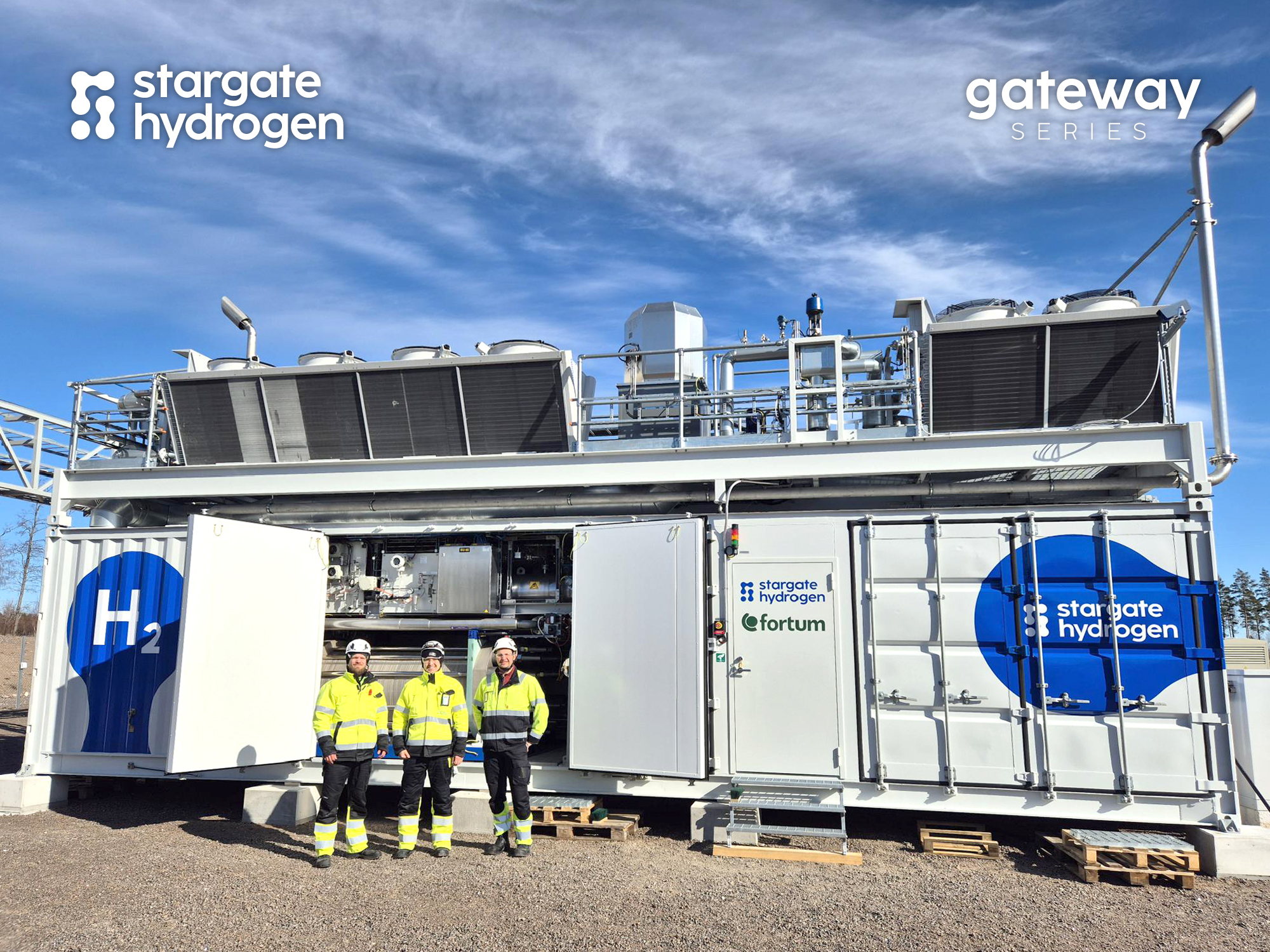
"At Kalla, we are building the practical experience needed to develop hydrogen solutions," says Satu Sipola, Vice President, P2X & Project Execution at Fortum. "Stargate Hydrogen demonstrated a high level of reliability and professionalism from start to finish."
The project required close cooperation throughout planning, delivery, and commissioning. For Fortum, reliability was demonstrated not only through equipment performance but also through project execution, responsiveness, and professionalism. The project shows that reliability goes beyond the electrolyser itself. It includes delivering promises, solving challenges efficiently, and supporting customers throughout the project lifecycle, qualities that are essential for successful power to hydrogen investments.
Electrolyser deployment at the Kalla Site
Power to Hydrogen Is Growing Up
Power to Hydrogen is entering a more demanding industrial phase. The industry is no longer focused on demonstrating that renewable hydrogen can be produced. The focus is now shifting toward whether projects can operate reliably, predictably, and economically at scale.
Efficiency will always matter. Electricity costs ensure that.
But the next generation of successful hydrogen projects will likely be defined by a wider set of operational realities: uptime, maintainability, degradation control, supply-chain resilience, and long-term system stability.
Industrial buyers are starting to evaluate electrolysers the same way they evaluate other mission-critical infrastructure assets.
Not by the best performance claim on day one, but by how the system performs year after year under real operating conditions.
That shift is likely to shape the next stage of the European Power to Hydrogen market.
Next Steps
Stargate Hydrogen works with industrial partners across the hydrogen value chain to support the development of reliable green hydrogen production systems for applications including refining, ammonia, methanol, steel, and energy infrastructure.
Whether you are assessing project feasibility, comparing Alkaline and PEM technologies, planning renewable integration, or preparing for FEED activities, Stargate Hydrogen’s team can help evaluate the technical and operational factors that influence long-term Power to Hydrogen project success.
Get in touch with Stargate Hydrogen to discuss how reliable Power to Hydrogen systems can support your green hydrogen production strategy and help move your project from concept to industrial operation.