

Ammonia is one of the world’s most important industrial chemicals and the base of modern nitrogen fertiliser production.
Nearly all mineral nitrogen fertilisers begin with ammonia, making it a critical input for global food production. Beyond fertilisers, ammonia is also used in the manufacture of plastics, explosives, and various industrial chemicals.
Today, most of the supply of hydrogen for ammonia production comes from fossil fuels. Natural gas is still the dominant feedstock globally.
These conventional production pathways contribute substantially to industrial emissions, making ammonia production one of the most energy-intensive chemical processes worldwide.

Hydrogen For Ammonia Production
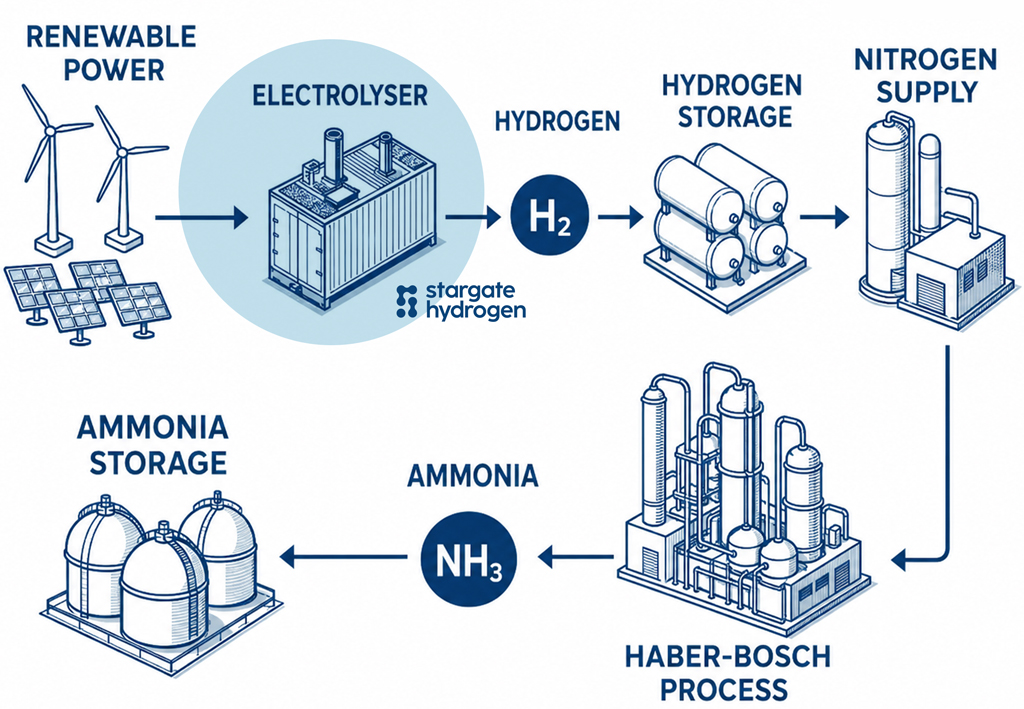
Hydrogen is the primary feedstock needed for ammonia production. The Haber-Bosch process combines hydrogen and nitrogen under elevated temperatures and pressures to produce ammonia. This means hydrogen supply is one of the most important design considerations in any ammonia plant.
Approximately 176 kilograms of hydrogen are needed to produce one ton of ammonia on a stoichiometric basis.
As ammonia production capacity increases, hydrogen demand grows proportionally.
Key Factors Driving Green Hydrogen for Ammonia Production

Net-zero commitments

Demand for low carbon fertiliser
Growth of renewable fuels

Investor focus on decarbonisation

National strategies
How Stargate Hydrogen Supports Ammonia Production
Stargate Hydrogen supports green ammonia projects with industrial alkaline electrolysers that produce hydrogen efficiently and reliably. Our scalable systems enable EPCs, project developers and industries to integrate green hydrogen into their ammonia production plants.

starbase
Series
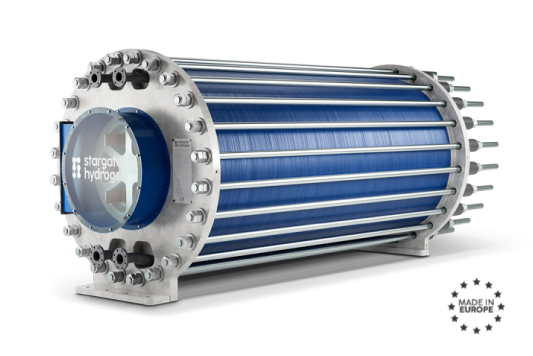
Large Scale Stacks
5 MW Next Generation Alkaline Stacks for System Integrators
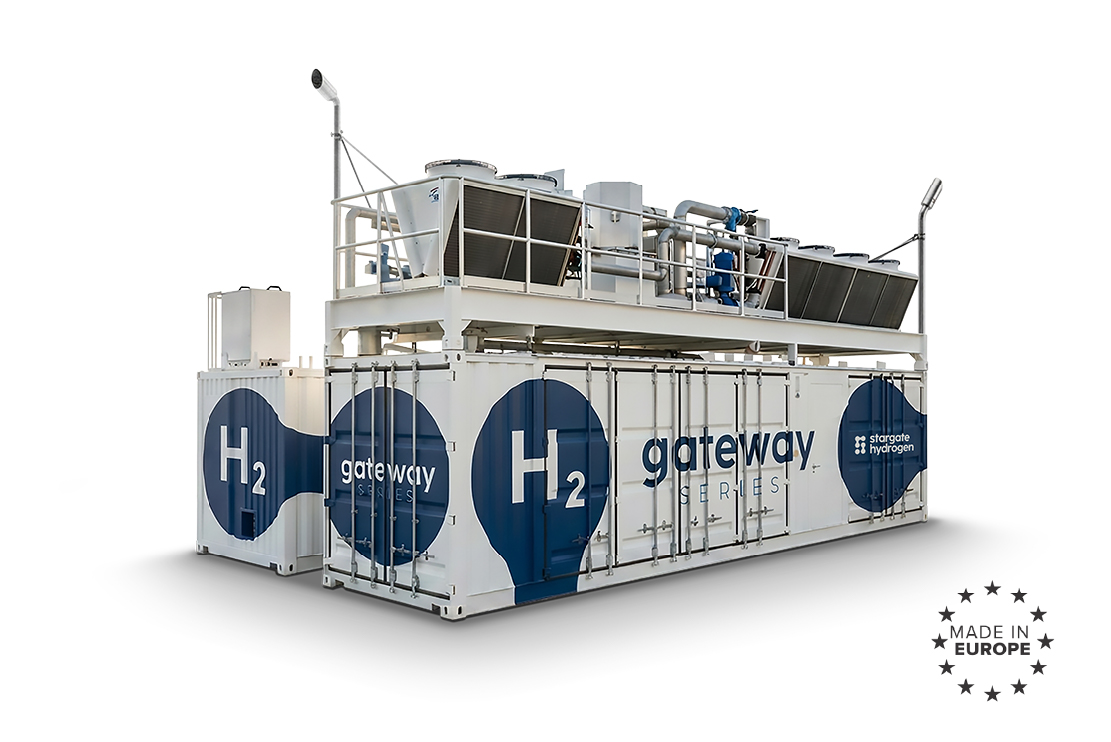
gateway
series
Electrolyser Systems
1 MW Containerised Alkaline Hydrogen Production Systems
aurora
Series
Large Scale Systems
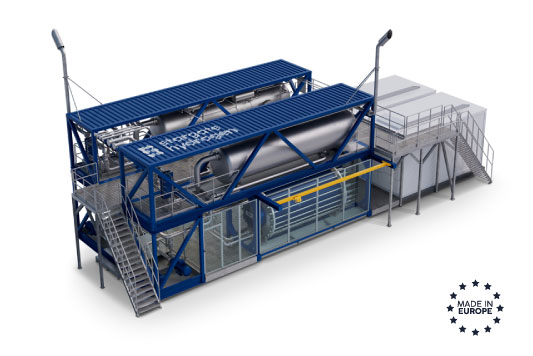
10 MW Containerised Alkaline Hydrogen Production Systems
10 Most Frequently Asked Questions about Ammonia Production
Stargate Hydrogen supports green ammonia projects with industrial alkaline electrolysers that break the water molecule and create hydrogen for ammonia production efficiently and reliably. Our scalable systems help developers and producers to integrate green hydrogen into ammonia production.


What Is Green Ammonia?
Green ammonia is ammonia produced using renewable hydrogen generated through water electrolysis powered by renewable electricity. The hydrogen is combined with nitrogen in the Haber-Bosch process to produce ammonia (NH₃).

How Is Green Ammonia Different From Grey Ammonia?
Grey ammonia uses hydrogen produced from fossil fuels, typically natural gas or coal, without carbon capture. Green ammonia uses renewable hydrogen from electrolysis, reducing emissions associated with hydrogen production.

Why Is Hydrogen Needed For Ammonia Production?
Hydrogen is one of the two essential feedstocks for ammonia production. In the Haber-Bosch process, hydrogen reacts with nitrogen to form ammonia according to the equation N₂ + 3H₂ → 2NH₃.

How Much Hydrogen Is Required To Produce One Tonne Of Ammonia?
Approximately 176 to 177 kilograms of hydrogen are required to produce one tonne of ammonia on a stoichiometric basis. Actual plant requirements may vary depending on process efficiency and operating conditions.

How Is Hydrogen Produced For Green Ammonia?
Hydrogen is produced through water electrolysis, where electricity is used to split water into hydrogen and oxygen. When powered by renewable energy, the resulting hydrogen is considered renewable or green hydrogen.

Can Alkaline Electrolysers Be Used For Green Ammonia Production?
Yes. Alkaline electrolysis is one of the most widely used and commercially mature technologies for producing renewable hydrogen for green ammonia projects.

What Are The Main Components Of A Green Ammonia Plant?
A typical green ammonia facility includes renewable power generation, water treatment, electrolysers, hydrogen storage, an air separation unit for nitrogen production, Haber-Bosch synthesis and ammonia storage infrastructure.

What Are The Biggest Challenges In Green Ammonia Production?
Key challenges include renewable electricity availability, electrolyser CAPEX, hydrogen storage requirements, water supply, infrastructure development, project financing and large-scale deployment.

Can Green Ammonia Be Used As A Fuel?
Yes. Green ammonia is being evaluated as a low-carbon fuel for shipping and power generation because it can store and transport renewable energy without containing carbon molecules.

What Size Electrolyser Is Needed For A Green Ammonia Plant?
The required electrolyser capacity depends on the ammonia production target, operating hours, electrolyser efficiency and hydrogen storage strategy. Larger ammonia plants typically require multi-megawatt hydrogen production systems.
Latest Articles about Hydrogen for Ammonia production

