

19.08.2026
Potassium Hydroxide in Alkaline Electrolysis: The 25 Most Frequently Asked Questions About KOH
Key Takeaways
- Potassium hydroxide (KOH) is the electrolyte used in alkaline water electrolysis.
- KOH doesn't produce H2 and is not consumed in the water-splitting reaction.
- KOH enables efficient conductivity by carrying ions between the electrodes.
- Most industrial alkaline electrolysers run with approximately 30% KOH
- Potassium hydroxide is strongly corrosive but not flammable.
- Electrolyte quality depends on concentration, purity, water quality, temperature, and carbonation, rather than pH alone.
Introduction
If you are planning an alkaline hydrogen project, potassium hydroxide (KOH) will almost certainly become part of the conversation. It influences electrolyser performance, maintenance planning, operating procedures, material selection, and long-term reliability. Yet despite decades of industrial use, KOH is still one of the most misunderstood aspects of alkaline water electrolysis.
KOH has been used safely in industrial alkaline electrolysers for many decades because its behaviour is well understood and its management is built into the plant design.
Rather than being an operational burden, the electrolyte becomes one element of a controlled process that includes circulation pumps, gas-liquid separators, instrumentation, compatible materials, containment systems, and defined maintenance procedures.
It is important to emphasize that the operation of an alkaline electrolyser does not require routine handling of open electrolyte. Modern systems are designed to keep KOH within a closed circulation loop.
This guide answers 25 of the most common professional questions about KOH in alkaline electrolysis. It explains the underlying chemistry, corrects common misconceptions, and highlights what project developers and procurement teams should look for when selecting an electrolyser supplier.
Frequently Asked Questions about KOH
1. What is potassium hydroxide?
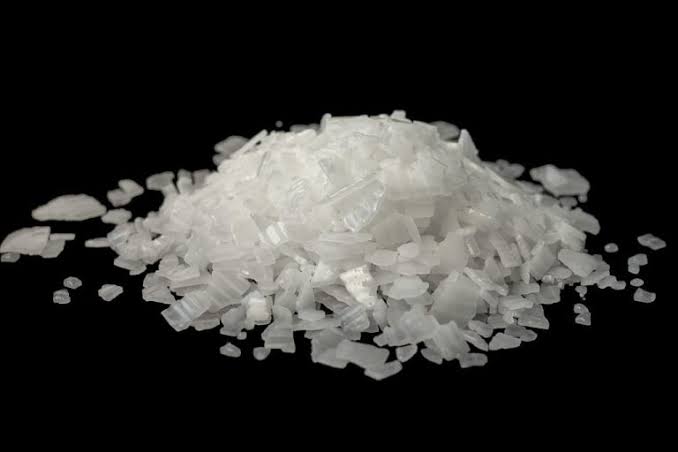
Potassium hydroxide (KOH), commonly known as caustic potash, is a strong inorganic base consisting of potassium, oxygen, and hydrogen.
Key properties include:
| Property | Value |
| Chemical formula | KOH |
| Molecular mass | 56.11 g/mol |
| Appearance | White solid, readily dissolved in water |
| Flammability | Non-flammable |
| Hazard classification | Strongly corrosive |
Under the European CLP Regulation, potassium hydroxide is classified as causing severe skin burns and eye damage, requiring appropriate handling procedures and personal protective equipment.
2. Why is KOH used in alkaline electrolysis?
KOH provides ionic conductivity that pure water does not. Pure water is actually a very poor electrical conductor. Without dissolved ions, electrical resistance is extremely high, making electrolysis inefficient.
When potassium hydroxide dissolves, it separates into potassium (K⁺) and hydroxide (OH⁻) ions:
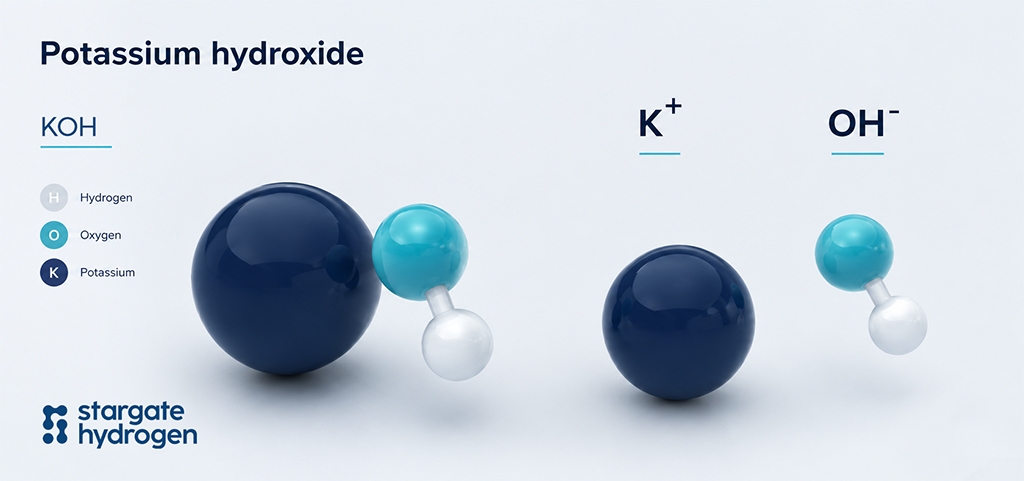
The hydroxide ions become the primary charge carriers between the electrodes, allowing current to flow efficiently through the electrolyte. Its role is to transport hydroxide ions between the electrodes while maintaining a stable alkaline environment inside the electrolyser.
Compared with pure water, a KOH electrolyte offers:
- Substantially lower electrical resistance
- Improved conductivity
- Lower cell voltage
- Higher overall efficiency
- Reliable long-term operation
It is important to recognise that these benefits arise from the electrolyte's physical properties rather than from any chemical consumption of potassium hydroxide itself.
3. Does KOH produce the hydrogen?
No. Hydrogen originates entirely from water molecules. Every hydrogen molecule produced during alkaline electrolysis comes from splitting water, not from consuming potassium hydroxide.
This distinction is fundamental because it explains why electrolyte replacement is driven by maintenance considerations rather than hydrogen production.
4. Is KOH consumed during electrolysis?
No. Potassium hydroxide acts as the electrolyte, meaning it takes part in ion transport but is regenerated during the overall process.
Electrolyte composition can gradually change because of operational factors such as:
- Water evaporation
- Maintenance activities
- Sampling
- Small leaks
- Electrolyte mist carryover
- Contamination
- Carbon dioxide absorption
These changes are managed through routine electrolyte monitoring rather than scheduled replacement after a fixed operating period.
5. How does KOH conduct electricity?
Electrical conduction in alkaline electrolysis occurs through dissolved ions.
Once dissolved, potassium hydroxide separates into:
- Potassium ions (K⁺),
- Hydroxide ions (OH⁻).
Hydroxide ions move through the electrolyte between the electrodes and complete the electrical circuit. Potassium ions play a supporting role by maintaining charge balance within the solution. This ionic movement enables continuous electrolysis.
6. What concentration of potassium hydroxide (KOH) is typically used?
Most industrial alkaline electrolysers operate with electrolyte concentrations in the approximate range of 20 to 30% KOH.
However, there is no universal optimum concentration.
Manufacturers determine the appropriate electrolyte composition based on factors including:
- Operating temperature
- Operating pressure
- Separator technology
- Electrode materials
- Circulation design
- Electrical conductivity
- Viscosity
- Freeze protection
- Long-term durability testing
This is why the correct concentration should always follow the electrolyser supplier's specification rather than a generic industry value.
7. Why not use the highest possible concentration?
It might seem logical that increasing potassium hydroxide concentration would always improve conductivity. In reality, electrolyte performance follows a balance.
As concentration increases:
- The number of charge-carrying ions rises
- Conductivity initially improves
- Viscosity also increases
- Pumping becomes more demanding
- Water activity decreases
Beyond the optimum concentration, the increase in viscosity begins to outweigh the conductivity benefit. The result can be higher pumping losses and lower overall system efficiency.
This is one reason why experienced electrolyser manufacturers optimise electrolyte concentration for the complete system rather than maximising a single parameter.
8. Is potassium hydroxide concentration the same as pH?
No. Although KOH solutions have a very high pH, pH alone does not indicate whether the electrolyte is in good operating condition.
Operators typically monitor:
- Electrolyte density
- Conductivity
- Titration results
- Laboratory analysis
- Electrolyte inventory
- Carbonate concentration
Taken together, these measurements provide a much more accurate assessment of electrolyte health than pH alone.
9. Why Water Quality Matters
One of the most common misconceptions is that alkaline electrolysers can operate with almost any water because they already contain a concentrated alkaline electrolyte.
While alkaline systems are generally more tolerant of water impurities than PEM electrolysers, they still require high-quality feedwater. Dissolved minerals, chlorides, silica, calcium, magnesium, and trace metals can accumulate within the electrolyte over time, affecting both performance and equipment life.
Modern alkaline electrolysers therefore typically use deionised (DI) or demineralised (DM) water that meets the manufacturer's specification and the requirements of ISO 22734.
Most industrial alkaline electrolysers require high-purity deionised or demineralised water.
Using water outside the specified quality can lead to:
- Contamination of the electrolyte
- Unwanted deposits
- Increased maintenance
- Accelerated corrosion of unsuitable components
- Reduced operating efficiency
The exact water specification varies between manufacturers and should always be treated as a design requirement rather than a recommendation.
10. Does the purity or grade of potassium hydroxide matter?
Yes. Industrial potassium hydroxide is available in different purity grades, and the choice can influence long-term electrolyte quality.
Lower-grade material may contain trace impurities that gradually accumulate within the electrolyte. Depending on their composition, these impurities can affect electrical conductivity, increase contamination, or contribute to unwanted deposits within the circulation system.
For this reason, electrolyser manufacturers normally specify:
- Minimum KOH purity
- Acceptable impurity limits
- Approved suppliers
- Electrolyte preparation procedures
Using the specified grade helps maintain consistent operating conditions throughout the equipment's lifetime.
11. What happens when potassium hydroxide absorbs carbon dioxide?
Potassium hydroxide readily reacts with carbon dioxide from the atmosphere.
The reaction is:
2KOH + CO₂ → K₂CO₃ + H₂O
This converts part of the potassium hydroxide into potassium carbonate. Among all electrolyte management topics, carbonation is one of the least understood.
Many engineers first encounter it during commissioning or maintenance planning, yet it has been recognised for decades as a normal aspect of alkaline electrolyte management.
The reaction occurs gradually whenever electrolyte is exposed to air during:
- Maintenance
- Filling
- Sampling
- Storage
- Prolonged venting
For this reason, industrial systems are designed to minimise unnecessary contact between the electrolyte and atmospheric air.
12. Does carbonate formation immediately damage the electrolyser?
No. Carbonation is generally a maintenance issue rather than an immediate equipment failure. Electrolysers continue operating while carbonate levels stay within acceptable limits defined by the manufacturer.
Instead of replacing electrolyte according to a calendar schedule, operators monitor electrolyte condition and determine maintenance based on measured data.
This condition-based approach reduces unnecessary maintenance while maintaining stable performance.
13. How is potassium hydroxide concentration monitored?
Professional alkaline electrolysers use several complementary monitoring techniques.
Typical monitoring methods include:
- Electrolyte density
- Electrical conductivity
- Laboratory titration
- Mass balance calculations
- Periodic laboratory analysis
Each method provides different information. For example:
| Measurement | Primary Purpose |
| Density | Estimate KOH concentration |
| Conductivity | Monitor ionic performance |
| Titration | Verify chemical composition |
| Laboratory analysis | Detect impurities and carbonate formation |
| Mass balance | Track long-term electrolyte changes |
Modern plants often combine online instrumentation with periodic laboratory verification to provide a complete picture of electrolyte condition.
14. How does temperature affect potassium hydroxide performance?
Temperature has a major influence on alkaline electrolysis. It affects electrochemical reaction rates, electrolyte conductivity, viscosity, gas production, and equipment lifetime.
Finding the optimum operating temperature involves balancing these effects rather than simply operating as hot as possible.
As temperature increases:
- Electrolyte conductivity generally improves
- Electrochemical reactions become faster
- Viscosity decreases
- Gas bubble removal becomes easier
These changes can improve overall cell performance. However, higher temperatures may also accelerate the ageing of seals, diaphragms, gaskets, and other components. Manufacturers therefore qualify operating temperatures that balance efficiency with long-term reliability.
15. Can potassium hydroxide electrolyte freeze?
Yes. Like any aqueous solution, potassium hydroxide electrolyte has a freezing point that depends on its concentration. Selecting the appropriate concentration helps improve low-temperature behaviour while maintaining conductivity and pumpability.
Where installations are exposed to cold climates, freeze protection may include:
- Controlled shutdown procedures
- Heated enclosures
- Insulated piping
- Trace heating
- Manufacturer-defined electrolyte concentration
These measures are integrated into plant design rather than treated as afterthoughts.
16. Is potassium hydroxide flammable or explosive?
No. Potassium hydroxide is non-flammable and does not burn. However, it is classified as a strongly corrosive substance under the European CLP Regulation and can cause severe skin burns and serious eye damage.
This distinction is important. The principal hazard associated with KOH is chemical corrosivity, not fire or explosion.
Hydrogen, rather than potassium hydroxide, is the flammable material within an operating electrolyser.
17. Why does mixing potassium hydroxide with water generate heat?
Dissolving potassium hydroxide in water is a strong exothermic process. As the solid dissolves, considerable heat is released.
For this reason:
- Electrolyte preparation follows defined procedures
- KOH is added gradually
- Appropriate mixing equipment is used
- Operators wear suitable personal protective equipment
- Temperature is controlled during preparation
These procedures are standard industrial practice and are described in supplier safety documentation and Safety Data Sheets.
18. Which materials are compatible with potassium hydroxide?
Material selection is one of the foundations of alkaline electrolyser design. Because potassium hydroxide is strongly alkaline, every component in contact with the electrolyte must be selected for long-term compatibility.
There is no single universal material suitable for every operating condition.
Compatibility depends on factors including:
- KOH concentration
- Operating temperature
- Pressure
- Mechanical loading
- Manufacturing method
Modern alkaline electrolysers commonly incorporate combinations of:
- Nickel
- Nickel-coated components
- Selected stainless steels
- PTFE
- PVDF
- EPDM and other qualified elastomers
- Engineered polymers validated by the manufacturer
Material selection is based on extensive testing and operational experience rather than chemical resistance tables alone.
19. Does potassium hydroxide corrode the electrolyser?
This question is often asked during procurement. The answer depends on the materials being considered. Potassium hydroxide is corrosive to many unsuitable materials.
However, industrial alkaline electrolysers are specifically designed using compatible materials that have demonstrated long-term performance under alkaline operating conditions.
When appropriate materials are used, corrosion is a managed engineering consideration rather than an inherent weakness of alkaline technology.
This illustrates an important distinction. The practical challenge is not whether potassium hydroxide is corrosive; it is whether the supplier has designed every wetted component, seal, pump, valve, and instrument for continuous operation in that environment.
20. Can potassium hydroxide enter the hydrogen stream?
Under normal operating conditions, only negligible amounts of electrolyte should be carried with the product gas.
Industrial alkaline electrolysers incorporate gas-liquid separators that remove entrained electrolyte droplets before the hydrogen leaves the stack. Depending on the application, additional drying and purification stages may be included downstream to meet the required hydrogen specification.
Mist carryover can occur if equipment is operated outside its design envelope or if separation components require maintenance. This is why gas-liquid separation is a core part of alkaline electrolyser engineering rather than an optional accessory.
21. Does potassium hydroxide affect hydrogen purity?
Not directly.
Hydrogen purity depends primarily on:
- Gas separation efficiency
- Electrolyte circulation
- Stack design
- Operating conditions
- Downstream purification
When these systems are properly engineered and maintained, alkaline electrolysers are capable of producing high-purity hydrogen suitable for demanding industrial applications. ISO 22734 establishes safety and performance requirements for hydrogen generators using water electrolysis, including aspects relevant to gas quality and system operation.
22. How often must potassium hydroxide be replaced?
There is no universal replacement interval. Unlike lubricating oil or filters, potassium hydroxide is not normally replaced according to a fixed annual schedule.
Instead, maintenance decisions are based on the condition of the electrolyte.
Operators typically assess:
- Potassium hydroxide concentration
- Carbonate content
- Contamination levels
- Water balance
- Laboratory analysis
- System operating history
Condition-based maintenance avoids unnecessary electrolyte replacement while helping maintain stable long-term performance.
23. What personal protective equipment (PPE) is required?
Anyone handling potassium hydroxide during electrolyte preparation, sampling, maintenance, or servicing should wear PPE appropriate to the task and the site's risk assessment.
The exact requirements should follow the Safety Data Sheet, the equipment manufacturer's instructions, and workplace procedures developed in accordance with European occupational health and safety legislation.
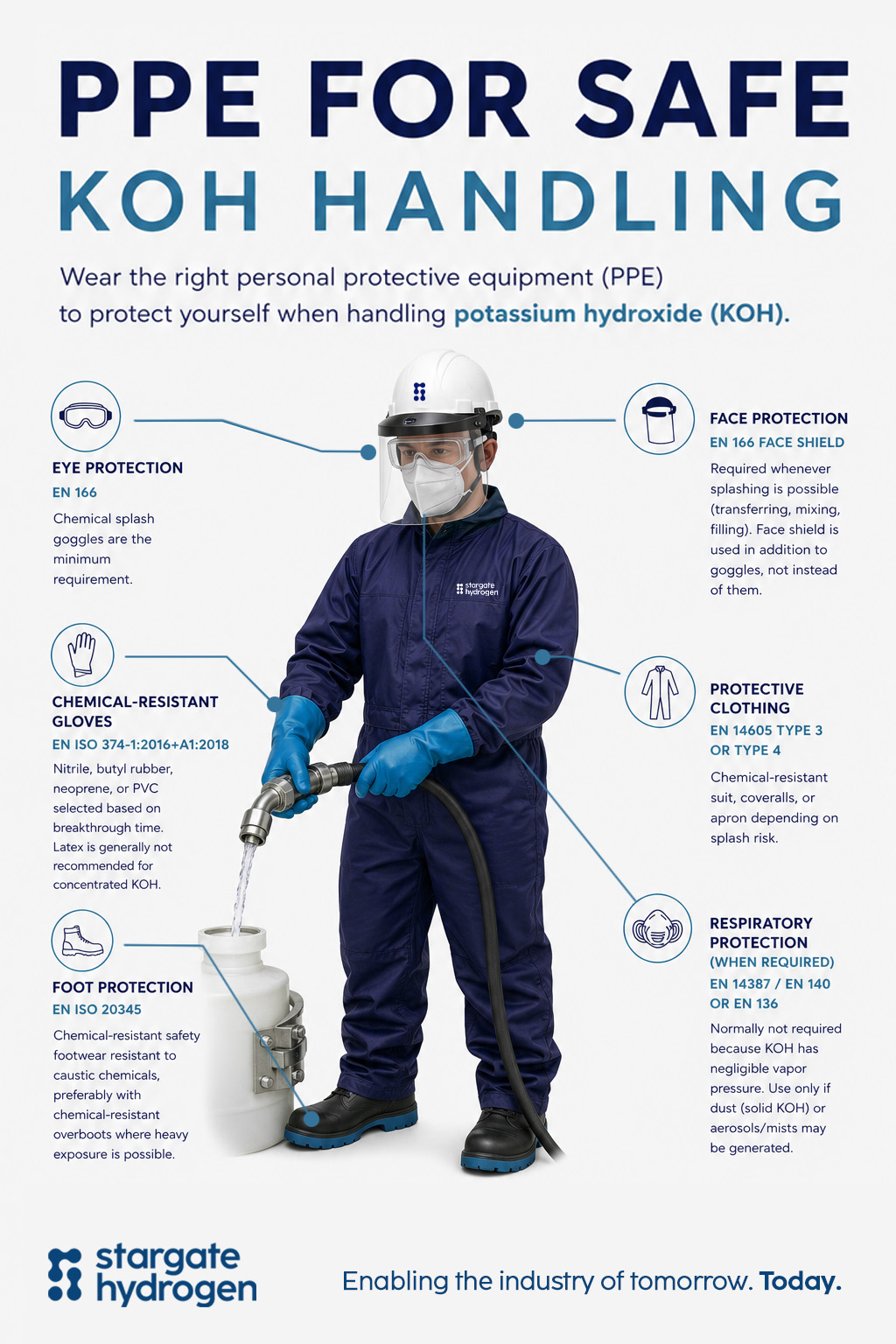
This is an important point for project developers. The objective is not simply to respond safely to spills but to minimise the likelihood of spills occurring in the first place.
24. What is the best? Alkaline or PEM Electrolysis
One of the most common misconceptions is to affirm that potassium hydroxide gives alkaline electrolysis an advantage or disadvantage compared with proton exchange membrane (PEM) technology.
The answer depends on the project. Neither technology is universally superior. Each has characteristics that make it suitable for different operating profiles and project requirements.
| Factor | Alkaline Electrolysis | PEM Electrolysis |
| Electrolyte | Liquid potassium hydroxide solution | Solid polymer electrolyte membrane |
| Main charge carrier | Hydroxide ions (OH⁻) | Protons (H⁺) |
| Electrode materials | Commonly nickel-based | Commonly platinum-group catalysts |
| Bulk liquid electrolyte | Required | Not required |
| Water quality | Demineralised water is enough | Very high-purity water required |
| Commercial history | Long-established industrial technology | Commercial and developing |
| Main operational focus | Electrolyte management and circulation | Membrane condition, catalyst performance, and water quality |
In practice, technology selection should consider:
- Project operating profile
- Hydrogen production requirements
- Integration with renewable electricity
- Capital expenditure
- Operating expenditure
- Maintenance philosophy
- Available utilities
- Lifecycle expectations
The choice is rarely determined by the electrolyte alone.
25. What are the most Common Misconceptions About Potassium Hydroxide
Before concluding, it is worth revisiting the misconceptions that most frequently arise during project planning.
| Misconception | Reality |
| Potassium hydroxide produces hydrogen | Hydrogen comes from water. |
| Potassium hydroxide is continuously consumed | It is regenerated during electrolysis; changes are mainly due to maintenance, contamination, and carbonation. |
| More potassium hydroxide always improves efficiency | Performance depends on the balance between conductivity, viscosity, temperature, and system design. |
| Potassium hydroxide always contaminates hydrogen | Proper gas-liquid separation and purification minimise electrolyte carryover. |
| Potassium hydroxide makes alkaline electrolysis unsafe | Modern electrolysers manage KOH through enclosed systems, compatible materials, monitoring, and established operating procedures. |
Conclusion
Potassium hydroxide has been the preferred electrolyte for conventional alkaline water electrolysis for decades because it provides the ionic conductivity needed to produce hydrogen efficiently and reliably.
Its role is often misunderstood. Like any industrial chemical, potassium hydroxide requires appropriate handling. It is strongly corrosive and demands suitable materials, procedures, and operator training. Modern alkaline electrolysers address these requirements through enclosed electrolyte circulation, gas-liquid separation, concentration monitoring, compatible materials, secondary containment, and clearly defined maintenance practices. The result is a mature technology with a long industrial track record.
For project developers and procurement teams, the practical question is not whether potassium hydroxide requires proper handling, but how completely the electrolyser supplier has engineered that handling into the system. A well-designed alkaline electrolyser integrates electrolyte management into every stage of the plant lifecycle, from commissioning and routine operation to maintenance and long-term support.
If you are evaluating alkaline electrolysis for a new hydrogen project, speak with Stargate Hydrogen about how electrolyte management, water quality, gas-liquid separation, safety systems, commissioning, and lifecycle support are integrated into the complete electrolyser solution.