
06.05.2026
Risk Reduction for Hydrogen Projects: How EPCs and OEMs Partnerships Significantly Improve Delivery and Bankability – By Rafael Pauli
About the Author

Rafael Pauli is the Vice President of Sales at Stargate Hydrogen and a member of the management board, where he leads the company’s global commercial strategy in the fast-evolving green hydrogen sector. Before joining Stargate Hydrogen, he held different sales-related key positions at McPhy and MTU Maintenance, where he deepened his expertise in complex energy technologies and industrial systems. He is a graduate of Technische Universität Braunschweig in Germany with a master's in industrial engineering.
Key Takeaways
- Risk reduction for hydrogen projects depends more on integration and execution than on the Electrolyser System choice alone
- EU regulations, such as RED III and RFNBO make compliance part of engineering design
- Many project risks arise at the interface between OEMs and EPC contractors. A structured EPC & OEM partnership improves execution, integration, and financing outcomes
- Integration-ready OEMs help reduce delays, performance gaps, and rework
- Clear documentation enables commissioning alignment and improves delivery certainty
- Stargate Hydrogen positions itself as an EPC-compatible OEM with engineering support and industrial credibility
Why Risk Reduction for Hydrogen Projects Has Become a Delivery Question
Hydrogen projects in Europe are no longer experimental. They are expected to operate as industrial assets that deliver predictable output, meet compliance rules, and justify capital investment. The shift from pilot projects to industrial deployments has changed how developers and EPC contractors approach project planning.
The central and most important aspect of the shift towards industrial deployments is risk reduction. Not because risk can be removed, but because it must be managed in a structured way that supports execution and financing.
A common mistake is to treat the choice of electrolyser as the main risk factor. In reality, hydrogen plants are integration-heavy systems. Power supply, water treatment, gas handling, control systems, and industrial interfaces must all function together. When these elements are not aligned early, even an electrolyser stack with outstanding performance cannot prevent project delays or underperformance.
This is why risk reduction for hydrogen projects depends on how well the electrolyser OEM and EPC contractor coordinate from the beginning.
The European Context: Compliance and Execution Are Interlinked
The European hydrogen policy has introduced a level of discipline that directly affects project design. RED III sets clear demand signals for renewable hydrogen in industry, while RFNBO delegated acts define strict criteria for what qualifies as renewable hydrogen.
These rules influence engineering decisions in ways that were not relevant a few years ago. Electricity sourcing, system boundaries, and operational strategies must now be designed with compliance in mind.
This creates a new layer of complexity for risk reduction for hydrogen projects. A project can meet technical performance targets and still fail commercially if it does not meet RFNBO requirements.
As a result, developers increasingly need delivery models that combine:
- Engineering accuracy
- Regulatory alignment
- Data traceability
This is where EPC–OEM collaboration becomes essential rather than optional.
Where Risks Sit: Stack vs System
A key insight for risk reduction for hydrogen projects is that the stack is only one part of the risk profile. Many of the largest uncertainties sit in system integration and execution.
Comparison: Stack Risk vs System-Level Risk
| Risk Area | Stack-Focused View | System-Level Reality |
| Performance | Efficiency and degradation | Full plant output and stability |
| Cost | Stack price | Balance of plant, construction, integration |
| Delivery | Equipment lead time | Full project schedule and coordination |
| Responsibility | OEM scope | Shared across OEM, EPC, and suppliers |
| Failure mode | Component failure | Interface mismatch, control issues |
This comparison shows why risk reduction for hydrogen projects cannot rely on technology selection alone. The interfaces between systems are often where problems appear.
The EPC & OEM Partnership Model
A structured partnership between the electrolyser OEM and EPC contractor provides a practical way to address these challenges. Instead of operating as separate vendors, both parties align on a shared delivery model.
In this model, the OEM focuses on the electrolyser system, while the EPC takes responsibility for the full plant. The value lies in reducing uncertainty between these scopes.
Role Allocation in a Strong Partnership
| Workstream | OEM Responsibility | EPC Responsibility |
| Electrolyser system | Stack design, performance parameters, documentation | Integration into plant design |
| Process integration | Define operating envelope and requirements | Design balance of plant and site systems |
| Safety | Provide electrolyser system-level data and support studies | Lead plant-wide safety engineering |
| Installation | Supervision of electrolyser system installation | Execution of full plant installation |
| Commissioning | Electrolyser commissioning, support of start-up and testing | Manage full plant commissioning |
| Operations | Provide service and diagnostics | Run plant and maintenance strategy |
| Compliance | Provide equipment-level data | Implement plant-wide reporting systems |
This structure improves risk reduction for hydrogen projects by removing ambiguity and ensuring that each party operates within a clearly defined scope.
Execution Risk: Why Projects Slip and How to Prevent It
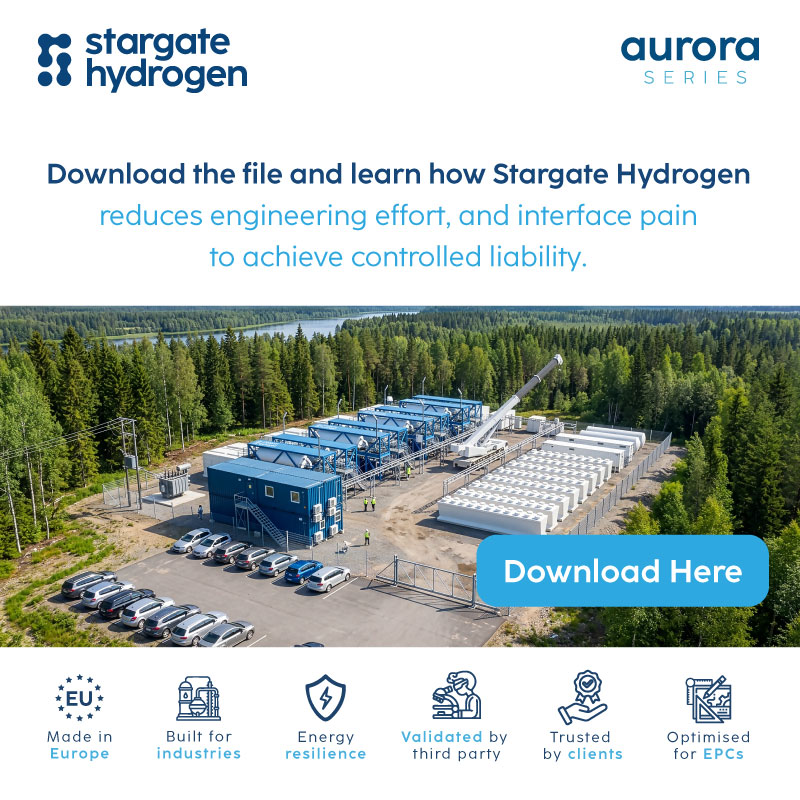
Execution risk is one of the most immediate concerns in hydrogen projects. Delays, redesigns, and commissioning issues often originate from unclear responsibilities or incomplete information.
When EPC contractors receive insufficient documentation or unclear interface definitions, they must fill in the gaps. This leads to assumptions that may not align with the OEM’s design.
A coordinated EPC–OEM approach changes this dynamic. Early collaboration allows both sides to align technical details before construction begins. Engineering reviews, including HAZOP studies and process flow validation, become shared activities rather than isolated tasks.
This reduces surprises during installation and start-up. In practical terms, risk reduction for hydrogen projects is achieved by replacing assumptions with agreed specifications.
Stargate Hydrogen supports this approach by offering engineering collaboration, including pre-FEED and FEED support, HAZOP study and PFD review, which helps EPC contractors work with defined inputs rather than incomplete data.
Integration Risk: When the System Does Not Perform as Expected
Integration risk often becomes visible only after commissioning. The electrolyser may meet its specifications, yet the plant does not achieve the expected output or efficiency.
This typically results from mismatches in:
- Balance of plant design
- Control system logic
- Process assumptions
- Utility supply conditions
Comparison: Weak vs Strong Integration Approach
| Aspect | Weak Integration | Strong EPC–OEM Integration |
| Interface definition | Incomplete or unclear | Clearly documented and agreed |
| Documentation | Fragmented | Structured and consistent |
| System design | Sequential | Coordinated early |
| Performance ownership | Disputed | Predefined |
| Commissioning | Reactive | Planned and aligned |
A strong integration approach improves risk reduction for hydrogen projects by ensuring that system performance is predictable before the plant is built.
Stargate Hydrogen’s modular system design and focus on integration support align with this model. By providing clear documentation and interface-ready systems, the company supports EPC contractors in building reliable plants.
Commercial Risk and Bankability: Ensuring there are funds in place
Technical success alone does not guarantee financing. Investors and lenders evaluate whether a project can be delivered, operated, and maintained with predictable outcomes.
This is where hydrogen project bankability becomes critical.
Projects are more likely to secure financing when they present:
- Clear allocation of responsibilities
- Credible performance guarantees
- Realistic delivery schedules
- Transparent operational assumptions
What Lenders Look For :
| Lender Concern | Required Evidence |
| Technology reliability | Performance data and warranties |
| Delivery risk | EPC track record and execution plan |
| Interface risk | Clear OEM–EPC role split |
| Operational stability | Maintenance and service strategy |
| Compliance | RFNBO-ready design and reporting |
A well-structured EPC–OEM partnership directly supports these requirements. It creates a consistent technical narrative that is easier to evaluate during due diligence.
This contributes to risk reduction for hydrogen projects by lowering uncertainty from a financing perspective.
Regulatory Risk: Designing for RFNBO Compliance
In Europe, regulatory compliance is closely tied to project economics. RFNBO rules define how renewable hydrogen must be produced and verified.
These rules affect:
- Power sourcing strategy
- System design and configuration
- Data collection and reporting
If compliance is treated as a secondary consideration, projects may face redesign or operational limitations.
A coordinated EPC–OEM approach ensures that compliance is integrated into the design phase. This includes aligning metering, data architecture, and operating assumptions.
This is a key part of risk reduction for hydrogen projects, as compliance failures can directly impact revenue streams and eligibility for support mechanisms.
What to Look for When Selecting an Electrolyser Partner
Procurement decisions have a direct impact on risk reduction for hydrogen projects. Selecting an electrolyser OEM is not only a technical choice; it is a decision about how well the project can be delivered, integrated, and operated over time.
A strong OEM partner should be evaluated based on how well they support EPC execution, not just on equipment specifications.
When assessing potential partners, the following criteria are particularly relevant:
- Interface documentation quality
The OEM should provide clear and detailed definitions of mechanical, electrical, and process interfaces. This reduces ambiguity during engineering and construction.
- Engineering support during design
Participation in HAZOP studies, PFD reviews, and design workshops ensures alignment between system components early in the project.
- Performance guarantees and test procedures
Guarantees should be clearly defined, measurable, and linked to agreed acceptance tests.
- Integration readiness
Modular design, standardised interfaces, and compatibility with EPC workflows support smoother system integration.
- Manufacturing capacity and lead times
The ability to deliver at scale within project timelines is essential for avoiding delays.
- Service and lifecycle support
Availability of spare parts, diagnostics, and long-term support affects operational reliability.
- Financial and industrial credibility
A partner’s stability and growth trajectory influence long-term project risk, especially for large-scale assets.
These criteria reflect a broader shift in procurement strategy. Risk reduction for hydrogen projects is no longer achieved by selecting the most efficient technology alone, but by choosing partners that can support full project delivery.
Stargate Hydrogen is an EPC-Compatible OEM
Stargate Hydrogen presents a model of an OEM structured for collaboration with EPC contractors and system integrators.
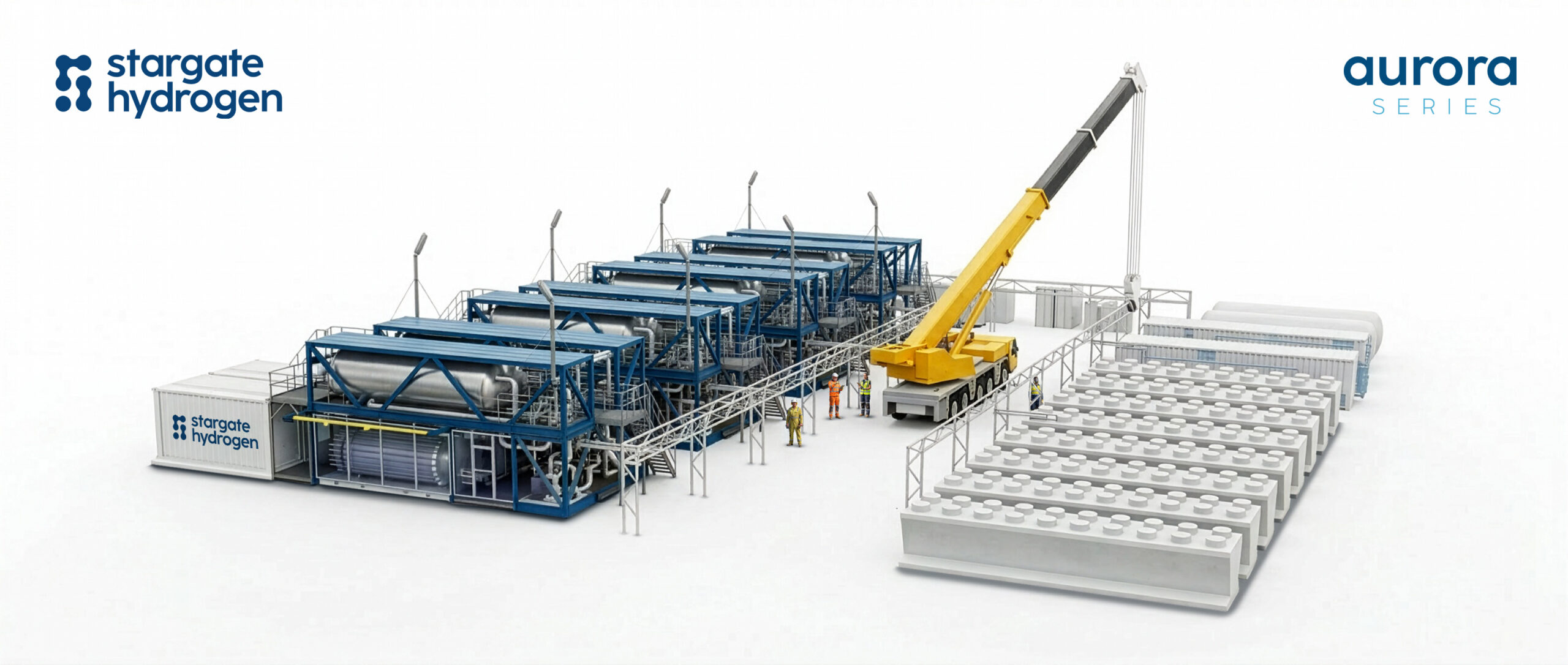
Its approach includes:
- Engineering support during design phases
- Participation in process and safety reviews
- Modular electrolyser systems for easier integration
- Clear documentation and defined interfaces
- Performance guarantees for industrial applications
Beyond technical capabilities, Stargate Hydrogen has strengthened its industrial position through expanded manufacturing capacity and financial backing by strong investors such as Repsol. This matters for EPC contractors and developers who must assess supplier reliability over the full project lifecycle.
These factors make Stargate Hydrogen a trustworthy partner that contributes to risk reduction for hydrogen projects, not just through technology, but through delivery alignment.
How Risk Reduction for Hydrogen Projects Is Evolving
The approach to risk reduction for hydrogen projects is changing as the market moves toward larger and more complex installations. Projects are no longer isolated demonstrations; they are part of industrial systems expected to operate reliably over extended periods.
Several trends are shaping how risks are managed:
- Increasing project scale
Electrolyser installations are growing from single-digit megawatt systems to multi-hundred-megawatt projects. This increases the importance of standardisation and repeatability.
- Greater emphasis on standardisation
Standard interface definitions and modular designs are becoming more common, reducing engineering variability between projects.
- Stronger lender scrutiny
Financial institutions are applying stricter due diligence, focusing on execution plans, risk allocation, and long-term performance assumptions.
- Integration of compliance into design
RFNBO requirements and emissions accounting are now considered during early engineering phases, not after construction.
- Shift toward repeatable delivery models
Developers and EPC contractors are moving away from one-off designs toward scalable project templates that can be replicated across sites.
These trends reinforce a crucial point: risk reduction for hydrogen projects is becoming more structured and process driven. Projects that rely on ad hoc coordination or loosely defined responsibilities are less likely to meet the expectations of regulators, investors, and industrial end-users.
As the market matures, the ability to deliver consistent, well-integrated projects will become a defining factor in project success.
Conclusion: Risk Reduction for Hydrogen Projects Is About How Projects Are Delivered at Stargate Hydrogen
No hydrogen project is without risk. What separates successful projects from delayed or underperforming ones is how those risks are structured and managed.
At Stargate Hydrogen, we firmly believe that risk reduction is most effective when applied consistently across the project lifecycle.
At the concept stage, early alignment prevents incorrect assumptions from shaping the design.
At the pre-FEED through FEED stages, Stargate Hydrogen teams validated process data, clear design envelopes, and dynamic models to enable accurate sizing and early risk identification. At this stage, they ensure support interface definition with BOP, deliver bankable documentation, and commit resources to improve cost certainty, reduce redesign, and ensure a smooth transition into execution.
During engineering, the clear interface definitions and the products designed using standard parts, optimised for EPCs, reduce the likelihood of integration issues. In procurement and construction, coordinated planning limits delays and scope gaps.
Commissioning benefits from predefined testing procedures and shared responsibilities, while operations depend on a clear service and maintenance structure.
This phased approach reinforces that risk reduction for hydrogen projects is not a single decision but a continuous process supported by collaboration.
Take the Next Step
If you are planning or delivering a hydrogen project, the way your partners work together will shape the outcome as much as the technology itself.
Stargate Hydrogen collaborates with EPC contractors and system integrators to support risk reduction for hydrogen projects through structured engineering, integration-ready systems, and performance-backed delivery.