

02.02.2026
The EXSOTHyC project reaches its final year
Optimising electrolysers towards lower voltages and higher efficiency.
EXSOTHyC (Exsolution-Based Nanoparticles for the Lowest Cost Green Hydrogen via Electrolysis) is a research and development project which aims to make green hydrogen cleaner, more affordable, and easier to produce. Supported by the Clean Hydrogen Partnership, the EXSOTHyC project is a three-year initiative coordinated by Stargate Hydrogen and brings together a strong team of universities and industry experts from across Europe. Partners include the University of St Andrews, Agfa-Gevaert, Eindhoven University of Technology, and Fraunhofer IFAM, all working together to turn innovative science into real-world hydrogen solutions.
EXSOTHyC project key innovations
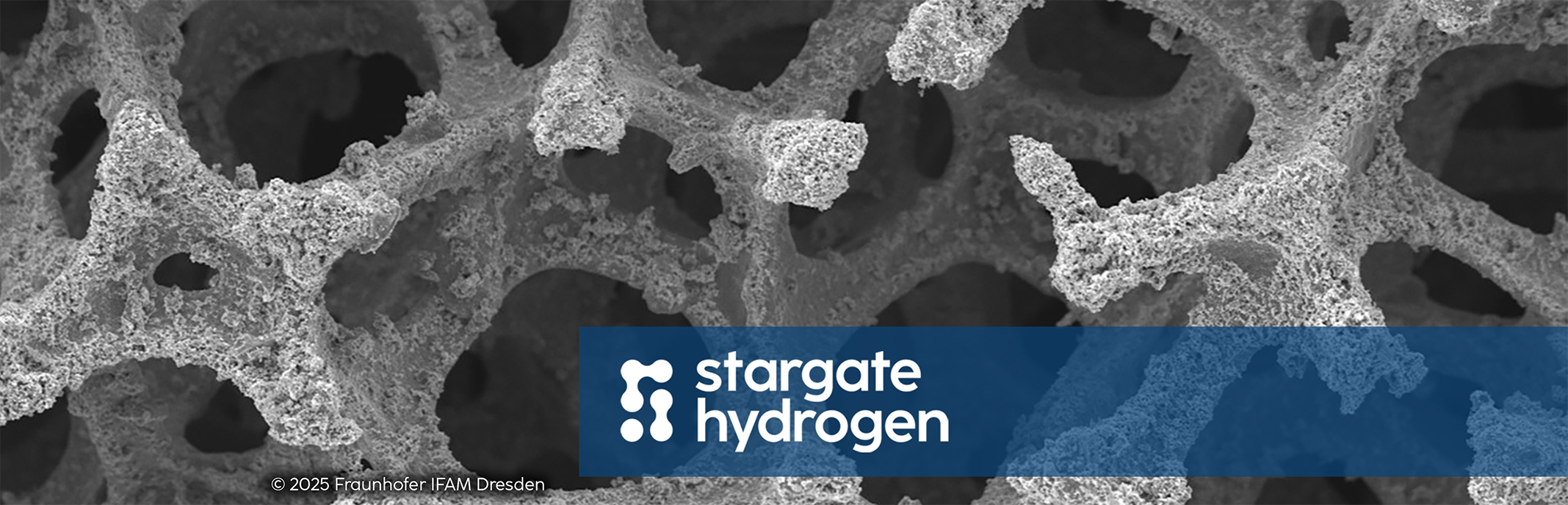
The key innovations in the project include the use of highly active nanoparticles obtained via a process called exsolution for use as electrocatalysts for alkaline electrolysis, but also novel diaphragm structures, which aim to lower the gas crossover in alkaline cells during very low load point operation. Additionally, the EXSOTHyC consortium has been developing catalyst-coated diaphragms: structures which resemble the membrane-electrode-assembly (MEA) structures known from PEM electrolysers, but which are based on porous Zirfon diaphragms instead.
The Exsothyc project first came about to address the challenges of the cost and efficiency of alkaline electrolysis. The consortium spent the past two years working towards this goal through their expertise in materials science and electrolyser design. Now, the focus is to scale up the practical solutions from the work that’s been achieved by the consortium over the past two years.
The final project phase of EXSOTHyC focuses on the following:
- Fabrication of larger-area electrodes incorporating EXSOTHyC materials and the catalyst-coated diaphragm structures
- Assembly and testing of a prototype electrolyser stack with project innovations
- Evaluation of performance and efficiency of the stack under industrially relevant operating conditions
- Identifying manufacturing and integration pathways compatible with industrial production
For the EXSOTHyC consortium, scaling up is about making sure everything works reliably, consistently, and without driving up costs. That’s why the project puts a strong focus on testing its ideas in industrially relevant electrolyser stacks with an active cell area approaching 1000 cm2, not just in the lab using single cells. This approach helps bridge the gap between promising research and practical industry-ready green hydrogen solutions.
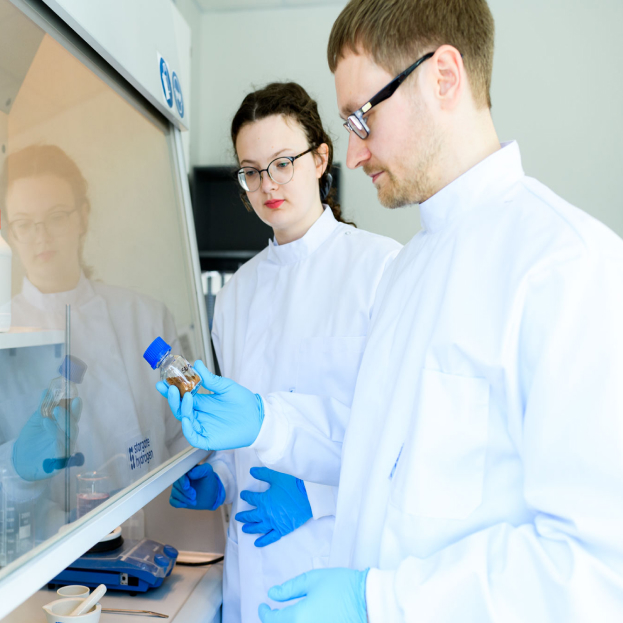
Dr Rainer Küngas, the Chief Technology Officer at Stargate Hydrogen, says: ‘EXSOTHyC is a truly ambitious international R&D project, which is spearheading the development of an entire new class of catalysts for use in alkaline electrolysers. In the project, we have brought together leading experts from across Europe to work on some of the most challenging problems facing alkaline electrolysers today. For the past two years, the consortium partners have been working primarily on small-scale and in the lab. During the final year of the project, the focus is on scale-up and on demonstrating the innovations on the stack level and in industrial conditions.’
Stargate Hydrogen, as the coordinator of the project, is looking forward to performing the validation and integration of the stack prototype to achieve the objectives of EXSOTHyC with the help of the consortium partners. Each of the project partners continues to greatly contribute towards the EXSOTHyC goals.
Agfa Gevaert is leading the development of Zirfon with reduced gas crossover, Eindhoven University of Technology leads the development of catalyst-coated diaphragms and tests on dynamic operation stability of cells, Fraunhofer IFAM Dresden and the University of St. Andrews are closely collaborating on the development of the novel electrodes.
Stay tuned on the Exsothyc project’s channels so you don't miss the exciting results that will be shared in the third and final year of research.