

23.03.2026
Hydrogen Battery Systems: Electrolysers and Batteries are Stronger Working Together
Key Takeaways
- A hydrogen battery system combines battery storage and electrolysers to deliver both a fast and on-demand energy supply and long-term energy storage.
- Batteries manage seconds-to-hours balancing, while hydrogen enables days-to-seasons storage and provides industrial feedstock.
- The International Energy Agency (IEA), reports that global battery storage is expanding rapidly.
- EU policy, including the REPowerEU plan and the European Hydrogen Bank, places renewable hydrogen at the center of industrial decarbonization.
- Hybrid hydrogen battery architectures strengthen resilience during extreme weather, Dunkelflaute events, and grid instability.
- Economic performance depends on electricity pricing, electrolyser utilisation, hydrogen storage method, and stacked value streams.
- Stargate Hydrogen supports industrial partners with advanced electrolyser technology designed for integration into hydrogen battery systems.
Rethinking The Hydrogen Battery Discussion
Energy storage debates often present a false choice: batteries or hydrogen.
For Europe’s industrial sector, that framing is not useful. Heavy industry requires uptime, energy cost control, and emissions reduction at the same time. Batteries alone cannot provide multi-day energy security. Hydrogen alone cannot deliver millisecond grid stabilisation.
A hydrogen battery system combines both technologies into a coordinated solution. Batteries stabilise power flows. Electrolysers convert electricity into hydrogen. Hydrogen storage extends duration and enables decarbonized industrial feedstock.
Between 2025 and 2050, this integrated hydrogen battery model is likely to become a core architecture in European industrial clusters.
Addressing Misconceptions About Hydrogen Battery Systems
“Batteries can replace hydrogen.”
Batteries are efficient for short-duration storage. However, for long-term energy storage, they cannot be built large enough to cover long-term energy needs, and they lose energy over time. Hydrogen provides long-duration storage and industrial feedstock value.
“Hydrogen is too inefficient.”
Round-trip electricity efficiency does not capture hydrogen’s industrial substitution role, where hydrogen can directly replace fossil sources, and its energy security value. Moreover, if hydrogen is produced during times when grid electricity is cheap, the round-trip efficiency becomes increasingly irrelevant.
“Electrolysers cannot operate flexibly.”
Research and pilot projects demonstrate increasing dynamic capability, especially in PEM systems. Moreover, if the hydrogen demand and grid electricity cost are known at least a day ahead, which is the most common case, the hydrogen production can be perfectly regulated to match demand and take advantage of the lowest prices.
“EU and UK regulation prevent scaling.”
Strict compliance frameworks exist, but funding mechanisms and support schemes are active and evolving.
What Is a Hydrogen Battery?
A hydrogen battery is not a single device. It is a hybrid energy system that integrates:
- A Battery Energy Storage System, BESS
- An electrolyser, typically Alkaline or PEM
- Hydrogen storage infrastructure
- Energy management and control systems
The battery stores electricity electrochemically. The electrolyser converts electricity and water into hydrogen and oxygen. Hydrogen can be stored and used for industrial processes, such as manufacturing green steel, fertilisers, hydrogenation, or re-electrification.
In practice, a hydrogen battery system operates across time layers:
- Seconds to minutes: Battery responds to grid frequency and rapid load changes.
- Hours: Battery and electrolyser coordinate to manage intraday price and renewable variability.
- Days to Seasons: Hydrogen storage provides extended buffering.
A hydrogen battery, therefore, acts as both electrical storage and molecular energy reserves.
Why Industrial Decarbonization in Europe Requires Hydrogen Battery Systems
Policy Direction
The European Commission’s REPowerEU plan sets an indicative target of 10 million tonnes of domestic renewable hydrogen production and 10 million tonnes of imports by 2030. Hydrogen is positioned as central to decarbonising energy-intensive sectors.
According to a 2025 European Parliament briefing, EU-27 hydrogen consumption in 2023 was approximately 7.3 million tonnes, largely used in refining and ammonia production. Much of this is still fossil-based.
At the same time, the IEA reports that global installed water electrolyser capacity reached around 1.4 GW by the end of 2023 and could approach 5 GW by the end of 2024, yet only a fraction of announced projects have reached final investment decision.
The IEA also notes rapid growth in battery storage markets, with capacity doubling in 2023 in energy terms, and substantial expansion required by 2030 in net-zero pathways.
These signals point to a combined scaling. Hydrogen battery systems directly address this integration challenge.
Industrial Constraints
Industrial sites face three persistent realities:
- Variable renewable electricity supply
- Grid congestion and price volatility
- High uptime requirements
A hydrogen battery system addresses these by dividing functions.
Batteries provide:
- Fast response to frequency deviations
- Peak shaving and ramp-rate control to buffer intra-day energy use
- Short-term backup during disturbances
- Buffered electricity to the hydrogen electrolyser to keep the uptime maximised
Electrolysers and hydrogen storage provide:
- Conversion of surplus electricity into storable hydrogen
- Multi-day and seasonal energy buffering to combat long-term grid volatility
- Low-carbon feedstock substitution
For EPC-scale industrial projects, this hybrid structure reduces operational risk while improving utilisation.
Hydrogen Battery Performance Under System Stress
Extreme Weather
Heatwaves, cold snaps, and storms increase grid stress.
In a hydrogen battery configuration:
- Batteries provide immediate ride-through capability.
- Hydrogen reserves support extended operation during prolonged disruption.
This layered approach strengthens industrial continuity.
Overcoming the Dunkelflaute
This layered flexibility is especially relevant in regions where low wind and minimal sunlight stress renewable-heavy systems. These periods are frequently referred to as “Dunkelflaute”, and they tremendously affect energy generation.
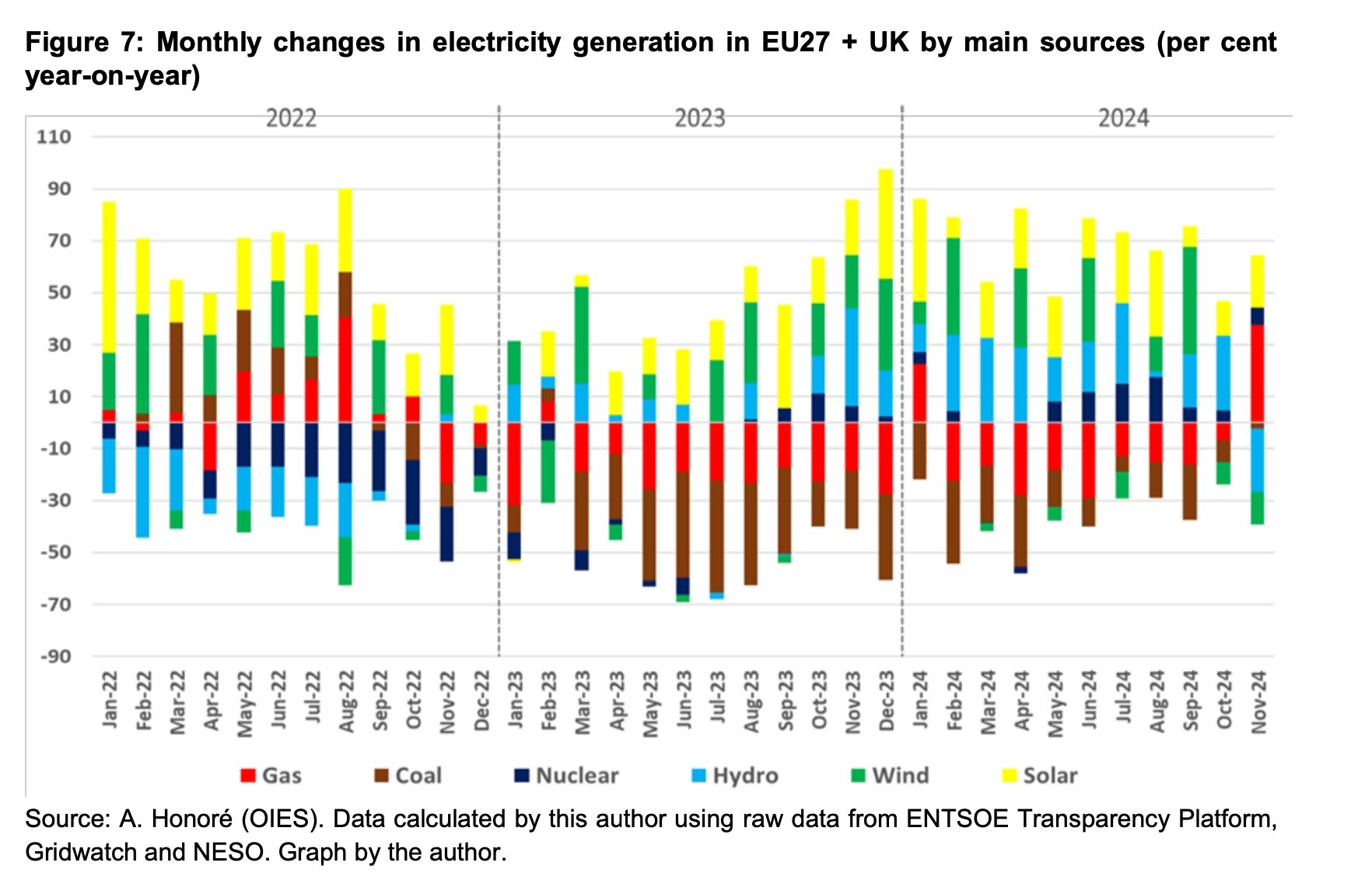
Dunkelflaute is a German compound word meaning "dark lull," referring to a weather period with low wind and minimal sunlight. This phenomenon significantly reduces renewable energy generation from wind and solar sources for days or weeks, forcing reliance on stored energy or conventional power plants.
Extended low renewable output is particularly relevant during the winters in Northern Europe.
Grid Instability
Research initiatives in Europe, including work under QualyGridS, have examined electrolyser participation in grid services. Experimental studies have validated the frequency-support capabilities of electrolysers under controlled conditions.
Within a hydrogen battery system:
- The battery absorbs rapid fluctuations.
- The electrolyser operates as a controllable load: it can increase the load to consume excess energy from the grid or decrease the load when there is a shortage of energy in the grid, stabilising the grid in both cases.
- Coordinated dispatch supports grid balancing.
This is increasingly relevant as renewable penetration increases.
Energy Security
Post-2022 energy security concerns in Europe reinforced the role of domestically produced renewable hydrogen in reducing fossil import exposure.
A hydrogen battery system paired with on-site renewables increases energy autonomy.
How A Hydrogen Battery System Extends Alkaline Electrolyser Lifetime
Alkaline electrolysers are well proven in steady-state industrial operation, but frequent start-stop cycles and rapid load swings can accelerate component stress. Thermal fluctuations, pressure variations, and repeated transitions between idle and production states contribute to mechanical fatigue, electrode wear, and balance-of-plant strain.
When an electrolyser is directly exposed to volatile renewable power or unstable grid conditions, these fluctuations become more frequent, which can reduce stack lifetime and increase maintenance intervals.
A hydrogen battery system mitigates this effect by placing a battery layer between the variable power input and the electrolyser. The battery absorbs short-term fluctuations, smooths ramp rates, and provides ride-through capability during brief disturbances. This allows the alkaline electrolyser to operate closer to stable setpoints for extended periods, supporting 24/7 operation even when upstream renewable generation is intermittent.
By minimising deep turndown events and repeated shutdowns, the system reduces thermal cycling and mechanical stress on critical components.
Maintaining steadier operating conditions improves performance predictability and supports longer stack service life. Over time, fewer shutdowns mean lower risk of seal degradation, reduced electrode stress, and more consistent electrolyte management. In a well-designed hydrogen battery configuration, the electrolyser is treated as a continuous production asset rather than a fluctuating load follower, which strengthens reliability and improves total lifecycle economics.
EU Policy Context for Hydrogen Battery Projects
Renewable Hydrogen Rules
The EU’s delegated regulation on Renewable Fuels of Non-Biological Origin defines additionality, temporal correlation, and geographic correlation requirements. These rules influence hybrid system design, particularly where batteries store electricity before electrolysis.
European Hydrogen Bank
The European Commission introduced the European Hydrogen Bank to support hydrogen production through auction-based mechanisms. Early auction rounds under the Innovation Fund provide fixed-premium support per kilogram of renewable hydrogen produced.
Stable offtake and predictable revenue are central to bankability.
Net-Zero Industry Act
The Net-Zero Industry Act sets a target for domestic manufacturing capacity for clean technologies, including batteries and hydrogen-related equipment, aiming toward at least 40% of annual deployment needs by 2030.
For EPC partners, policy alignment directly affects project timelines and financing structures.
UK Policy and Hydrogen Battery Integration
The UK Hydrogen Strategy keeps a 10 GW ambition for low-carbon hydrogen production capacity by 2030.
The Low Carbon Hydrogen Standard, updated version 4 in January 2026, provides guidance on emissions accounting and treatment of stored electricity inputs. This is directly relevant for hydrogen battery systems that integrate battery storage upstream of electrolysis.
For UK-based projects, compliance alignment is not optional. It shapes design, operation, and reporting structures.
The Role of Stargate Hydrogen in Hydrogen Battery Systems
For hydrogen battery architectures to perform reliably, electrolyser performance under variable load conditions matters.
Dynamic operation affects stack lifetime, efficiency, and integration performance. Advanced stack design and system engineering influence how effectively an electrolyser operates within a hybrid hydrogen battery environment.
Stargate Hydrogen develops electrolyser technology engineered for industrial integration, including compatibility with battery-buffered systems and variable renewable inputs.
For EPC partners and industrial developers evaluating hydrogen battery projects, early alignment between stack performance, system design, and compliance requirements reduces execution risk.
If you are planning a hydrogen battery system and need technical expertise on electrolyser integration, contact Stargate Hydrogen to discuss how tailored solutions can support your project objectives.