
10.04.2026
Electrolyser Waste Heat Utilisation in Cold-Climate Regions: Turning Hydrogen Production into a Reliable Source of Heat
Key Takeaways
- Electrolyser waste heat utilisation turns hydrogen plants into facilities that produce both hydrogen and useful heat.
- Around 20–40% of the electricity used in electrolysis becomes heat, which can be recovered instead of rejected through cooling systems.
- Industrial electrolysers generate large quantities of heat; a 10 MW electrolyser can produce 2–3 MW of recoverable heat.
- Cold regions provide ideal conditions for electrolyser waste heat utilisation because heating demand is high, and district heating infrastructure is already widely deployed.
- Hydrogen waste heat recovery can potentially improve alkaline electrolyser efficiency by around 10% when integrated properly into surrounding energy systems.
- District heating networks create one of the most practical pathways for electrolyser waste heat utilisation.
- Hydrogen projects integrated with heat recovery can reach total energy utilisation above 90% when hydrogen and heat outputs are considered together.
- Power-to-X heat integration allows electrolyser heat to support processes such as methanol synthesis, ammonia production, and CO₂ capture.
Valuable Electrolyser Waste Heat Recovery
Electrolysis is usually discussed as a pathway for producing green hydrogen. Yet it is often overlooked that every electrolyser plant also generates a large amount of heat. Understanding electrolyser waste heat utilisation means recognising that hydrogen production naturally produces two energy streams, hydrogen and thermal energy.
During electrolysis, electricity splits water molecules into hydrogen and oxygen. A portion of the electricity becomes chemical energy stored in hydrogen. Another smaller portion becomes heat generated within the electrolyser stack and supporting systems.
However, this heat is not optional. It must be removed continuously to maintain stable operating conditions. Without cooling systems, electrolyser stacks would exceed their operating temperature limits.
For many hydrogen projects, this heat is treated as a by-product and rejected through cooling towers or air coolers. However, in modern energy systems, this approach leaves significant energy unused. Through electrolyser waste heat utilisation, hydrogen plants can convert this thermal output into a valuable resource.
In regions with high heating demand, such as the Nordic countries, hydrogen facilities can supply nearby heat consumers while producing hydrogen.
Energy Balance of Electrolysis
A clear understanding of the electrolysis energy balance is essential when evaluating electrolyser waste heat utilisation.
The electrochemical reaction that splits water requires energy equivalent to the higher heating value of hydrogen.
2H₂O → 2H₂ + O₂
In practical systems, the electrical energy supplied to the electrolyser divides into three main energy outputs.
Typical energy distribution:
| Energy Output | Typical Share |
| Hydrogen chemical energy | 60–70% |
| Waste heat | 20–40% |
| Auxiliary losses | 5–10% |
The heat part originates from several mechanisms within the system:
- Electrical resistance in electrodes and conductive components
- Activation losses in electrochemical reactions
- Power electronics and current conversion equipment
- Gas separation and compression systems
All these processes produce thermal energy that must be removed from the system.
Instead of rejecting this heat with what is technically called a heatsink, the electrolyser waste heat utilisation captures it and directs it to another system that could benefit from this heat, for example, the district heating grid.
Heat Exchangers in Hydrogen Waste Heat Recovery
Heat exchangers are the core component enabling hydrogen waste heat recovery in electrolyser systems. Their role is to transfer heat from the electrolyser cooling loop to another fluid circuit without mixing the fluids themselves.
Plate heat exchangers are widely used because their geometry provides a remarkably high surface area for heat transfer within a compact volume. In plate heat exchangers, there are two separate circuits for liquids to run through, one for the hot liquid and one for the cold liquid. The bigger the plates are, the more efficient the exchange of temperature is. The plates create narrow channels that promote turbulent flow, improving thermal exchange efficiency between the two fluids in the circuits.
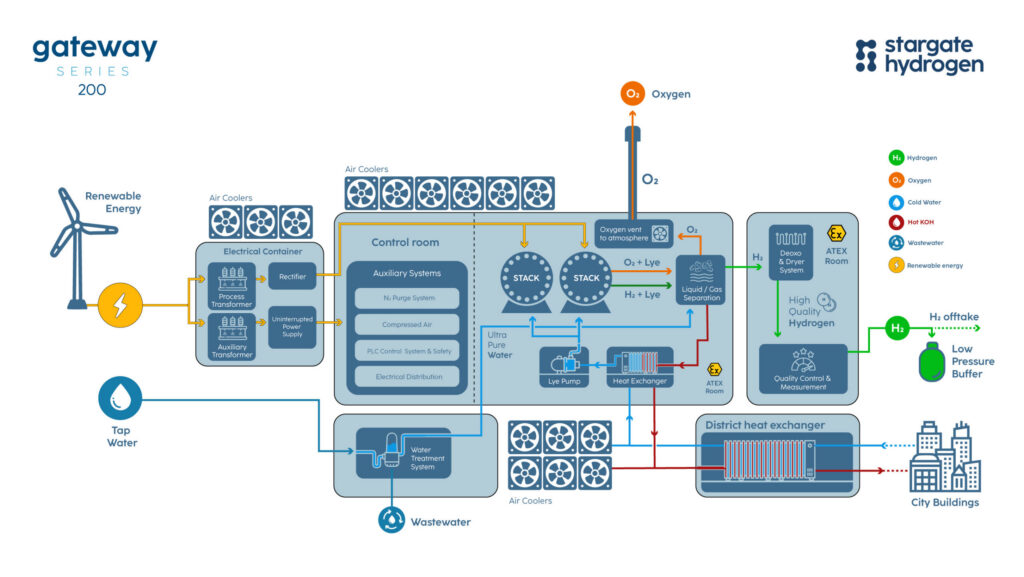
In electrolyser applications, the first liquid circuit usually holds the cooling water that circulates through the electrolyser stack. The second circuit carries water that is connected either to a district heating network or to a heat pump system. As the fluids flow across the plates, heat passes through the metal surfaces and is transferred to the secondary circuit.
The effectiveness of the heat exchanger directly affects the performance of the electrolyser waste heat utilisation. Key engineering parameters include:
- Temperature difference between circuits
- Flow rate of the coolant
- Size of the transfer surface area
- Pressure drops across the exchanger
Optimising these parameters allows engineers to capture as much recoverable heat as possible while keeping stable stack operation.
For large hydrogen facilities, multiple heat exchangers are often installed in parallel to handle the total heat load generated by the electrolyser system.
Why Cold Climates Increase the Value of Electrolyser Waste Heat Utilisation
Cold regions create strong conditions for electrolyser waste heat utilisation because heat demand is still high for extended periods each year. The Nordic countries give a clear example of this opportunity.
Strong Heating Demand
In the Nordic countries, more than half of buildings are connected to district heating networks. These networks distribute hot water through insulated pipelines that supply heating to residential and commercial buildings.
This infrastructure makes hydrogen waste heat recovery useful, all at once.
Cold Weather Conditions
Typical winter temperatures across the Nordic region range between - 10 °C and −30 °C. Such conditions increase the economic value of heat. Instead of rejecting thermal energy through cooling towers, hydrogen plants can deliver it to district heating systems where it directly replaces fossil heating sources.
Supporting Hydrogen Plant Operations
Recovered heat also supports internal hydrogen facility operations. In cold climates, electrolyser waste heat utilisation can help maintain stable operating conditions.
Common internal uses include:
- Heating equipment enclosures
- Freeze protection for process pipelines
- Water treatment systems
- Gas purification and drying systems
These applications reduce auxiliary electricity consumption and improve overall plant efficiency.
Cold Climate Engineering Considerations
Hydrogen plants operating in cold climates must address several technical challenges.
Freeze Protection
Critical systems that require heating include:
- Water pipelines
- Electrolyte loops
- Gas purification systems
Electrolyser waste heat utilisation can supply this internal heating demand.
Insulation
Outdoor hydrogen equipment typically requires:
- Thermal insulation for pipelines
- Insulated equipment enclosures
- Weather-protected installations
Snow and Ice Management
Facilities operating in cold regions often require:
- Structures Elevated from the ground
- Weather protection systems
- Heated maintenance areas
Proper engineering ensures reliable hydrogen production in harsh environments.
Heat Exchangers in Electrolysers Waste Heat Recovery
Electrolysers produce what engineers refer to as low-temperature heat. Despite the name, this heat is well-suited for several industrial and energy system applications.
Typical operating temperatures vary slightly depending on electrolyser technology.
| Electrolyser Type | Stack Temperature | Waste Heat Temperature |
| Alkaline (AEL) | 60–90 °C | ~70–80 °C |
| PEM | 50–80 °C | ~60–70 °C |
These temperatures make electrolyser waste heat utilisation compatible with several applications:
- District heating systems
- Heat pump upgrading
- Industrial low-temperature processes
- Power-to-X heat integration
Alkaline electrolysers often provide slightly higher temperature heat streams, which can simplify integration with district heating systems. This is one reason alkaline electrolyser efficiency improvements through heat recovery are often highlighted in large hydrogen projects.
Heat Output at Industrial Electrolyser Scale
The scale of electrolyser waste heat utilisation becomes more apparent when hydrogen production reaches industrial capacity. Large hydrogen plants produce substantial amounts of recoverable heat.
Example: 10 MW Electrolyser System
Typical performance values:
- Electrical input: 10 MW
- Hydrogen output: around 200 kg per hour
- Recoverable heat: approximately 2–3 MW
At this scale, hydrogen plants effectively operate as combined hydrogen and heat facilities. This makes electrolyser waste heat utilisation an important design consideration for large Power-to-X installations.
As a point of comparison, assuming an average heating demand of 10 kW per house, a continuous 3 MW heat supply could serve up to 300 houses during winter.
District Heating Integration
District heating networks are one of the most practical pathways for electrolyser waste heat utilisation, especially in Northern Europe where temperatures can reach up to –30°C.
District heating systems distribute hot water through insulated pipelines across urban areas. Buildings connected to the network receive heat through local heat exchangers.
Hydrogen plants integrated with district heating can supply this network with low-carbon heat.
Hydrogen plants typically use closed cooling systems to control stack temperature. These systems form the basis for electrolyser waste heat utilisation.
This architecture is commonly used in large hydrogen facilities and Power-to-X plants. From this point, recovered heat can be transferred to several destinations.
Benefits of this integration include:
- Higher overall energy efficiency
- Reduced fossil heating demand
- Stable year-round heat demand
- Better utilisation of renewable electricity
District Heating Energy Source Diversification
Modern district heating systems increasingly rely on a diversified mix of heat sources. Instead of depending on a single fuel or technology, networks can integrate heat from industrial processes, power plants, waste treatment facilities, and new energy systems such as hydrogen production. This diversification improves system resilience and allows cities to capture heat that would otherwise be lost. The development of the district heating system in Gothenburg, Sweden, illustrates this approach.
In 2025, Göteborg Energi achieved its goal of fully transitioning its district heating system to 100% renewable and recycled energy sources, cutting fossil fuels. Key developments include increased use of waste heat, and the deployment of large-scale thermal storage tanks. In total, about 80% of the homes in the city are supplied by the district heating system.
Gothenburg has not yet included waste heat from electrolysers into its grid, but this type of system provides an ideal environment for electrolyser waste heat utilisation. The heat produced during electrolysis behaves similarly to other low-temperature heat sources already used in district heating networks. As a result, hydrogen facilities can contribute thermal energy to the system alongside existing heat sources.
In diversified district heating networks, electrolysers therefore become part of a broader urban energy system that simultaneously produces hydrogen and useful heat.
Source: Heat grid of Gothenburg. ©Göteborg Energi
Case Study: Stargate Hydrogen and Utilitas in Tallinn
A practical example of electrolyser waste heat utilisation is currently working in Estonia.
Stargate Hydrogen has integrated an electrolyser system with the Utilitas district heating network in Tallinn. The system produces green hydrogen while capturing heat from the electrolyser cooling loop. This heat is transferred into the district's heating network, where it supplies thermal energy to buildings connected to the system.
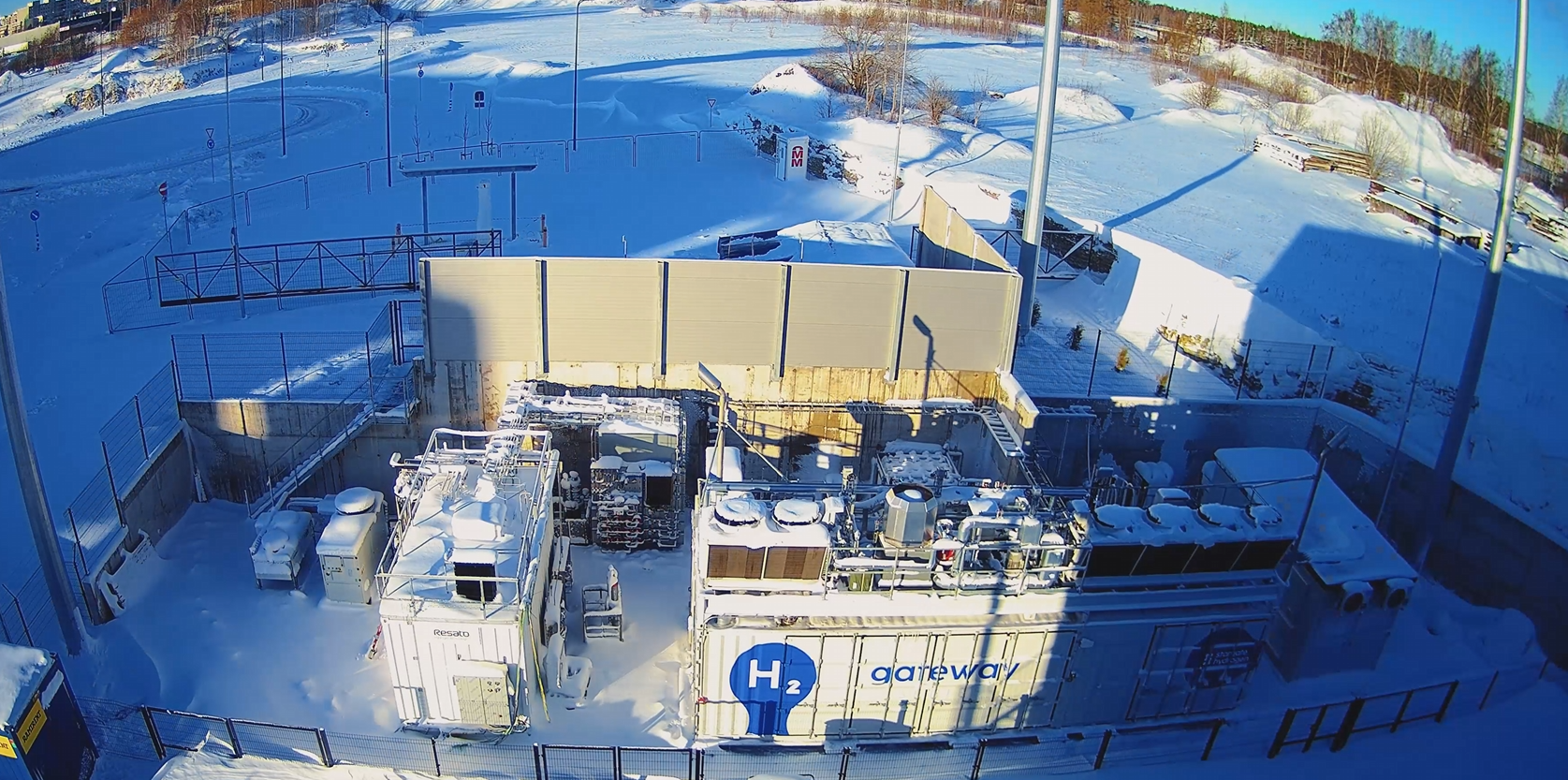
Key characteristics of the project include:
- Production of green hydrogen through Alkaline electrolysis
- Hydrogen is used to fuel a fleet of 30 taxis
- Recovery of waste heat from the electrolyser
- Integration with the Utilitas district heating system
The project demonstrates how hydrogen infrastructure can integrate with existing urban energy systems.
This example illustrates how electrolyser waste heat utilisation can convert hydrogen plants into multi-product energy facilities.
Learn more about this project here.
Electrolyser Waste Heat in Power-to-X Facilities
Hydrogen is often only one of several steps in larger energy conversion systems. Power-to-X heat integration allows electrolyser heat to support other processes. Examples include:
Methanol Production
Electrolyser heat can assist with distillation systems and Feedstock preheating.
Ammonia Production
Recovered heat can supply process water heating and plant utility systems.
CO₂ Capture
Carbon capture technologies require substantial low-temperature heat. Electrolyser heat can supply part of this demand.
These integrations improve the energy performance of the entire Power-to-X facility.
Efficiency Gains from Electrolyser Waste Heat Utilisation
Studies show that integrating electrolyser waste heat utilisation systems can potentially increase alkaline electrolyser efficiency by around 10%. The improvement occurs because thermal energy that would otherwise be rejected is converted into useful output.
When EPC companies design hydrogen facilities, the inclusion of waste heat utilisation alters how hydrogen plants are evaluated. Instead of a single-output system producing hydrogen only, the plant becomes a multi-output energy system.
Economic Impact of Hydrogen Waste Heat Recovery
Beyond efficiency improvements, electrolyser waste heat utilisation can improve the economics of hydrogen projects.
Lower Hydrogen Production Costs
Revenue from heat sales can reduce hydrogen production costs by approximately 5–7%, depending on project configuration.
Additional Revenue Streams
Recovered heat can be sold to:
- District heating utilities
- Industrial facilities
- Greenhouse agriculture
- Commercial buildings
This creates a second revenue stream from the same electricity input.
Reduced Cooling Infrastructure
Direct impact on CAPEX. When heat is recovered instead of rejected, hydrogen plants may reduce equipment such as:
- Cooling towers
- Large air coolers
- Heat rejection systems
Lower cooling infrastructure requirements reduce both capital expenditure and operating costs.
Conclusion
Electrolysis will be of immense importance for decarbonising industries which cannot be electrified. Yet hydrogen is only one part of the output produced by electrolysers.
Through electrolyser waste heat utilisation, hydrogen plants can supply useful heat alongside hydrogen production. In cold regions with district heating infrastructure, this heat becomes an immediate energy resource rather than a rejected by-product.
Projects such as the Stargate Hydrogen and Utilitas integration in Tallinn show how hydrogen production can connect directly with urban energy infrastructure.
For EPC companies and Power-to-X developers, integrating electrolyser waste heat utilisation into hydrogen project design can improve system efficiency, create new revenue streams, and strengthen project economics.
To discuss how modular alkaline electrolysers and integrated heat recovery can support your hydrogen project, contact the Stargate Hydrogen team to explore the best solution for your application.